
















































Pick It Up and Dump It
Without one or the other, we probably couldn’t function.
Thursday, January 31, 2008
By Paul Hull
“What do you mean by truck? Pickup or dump?” The question was asked so many times that we decided to discuss both kinds of trucks used by construction companies. You can get the dimensions and capabilities from the manufacturers, their dealers and advertisements, so we don’t need to go into those in great detail, but there are attitudes and preferences that have changed and are still changing. One of the most obvious changes has been that top executives in big construction companies are less likely to receive big pickup trucks as part of their employment package. Why would they need a 1.5-ton pickup in their daily work, except to show how important they were? If the only travel an executive, manager or supervisor does is from site to site, or office to site, with no use of the truck’s cargo space or towing capabilities, a full size model may be more than required. Today’s tendency is to provide cars or SUVs; they are more practical, less expensive and require less fuel. A pickup is essentially a work truck.
In the large families of yesteryear, the oldest children received the new clothes, and these were gradually passed down to the youngest (tough sometimes, I’m told, if you were a boy with five older sisters). In the history of pickup trucks for people in construction companies, there seems to have been a similar family system. The boss had the best pickup and, as it aged, was dented, scraped, and scratched, it went to the foreman and finally to the man who ran about town for parts, and for whom a rusty bucket on wheels seemed adequate transport for the level of his work. It says much for the quality of pickups that many of them do more than 150,000 miles of loyal service before they are given the last rites by contractors. They’ll use several sets of new tires in that time but the basic pickup can truly be called our faithful, long-term servant.
Perhaps you have always bought equipment and vehicles from a certain dealer? Loyalty is certainly a good habit on the part of customer and dealer, but it can assume that your favorite dealer has exactly what you want. At the risk of infuriating those who have had a contractor’s business for many years and think that’s how everything should stay forever, we would suggest that today’s first step on the buyer’s part is to determine and write down exactly what is needed to do the job right. Then you can go and see who has it. Your favorite dealership, of course, could well be the first place to go, to see if they can obtain what you want. But be picky. In 2008, to say that a truck is a truck is a truck is just not true. Many options and components you can have in a pickup truck for your business are available; the responsibility for finding them is yours.
We hasten to add a little extra to the last paragraph. If you compare pickup trucks with similar capabilities from different manufacturers, you’ll find there is not much difference. Your favorite dealer’s models may be (give or take a few aspects) as good as the other one across town. We looked at comparisons for a 2007 Chevrolet Silverado Classic 1500HD Crew Cab 2WD (LT1 standard box), a 2007 Toyota Tundra 4x2 (SR5 double cab), a 2007 Ford F-150 Supercrew 4x2 (139” WB XLT Styleside), and a 2007 Dodge Ram 1500 Quad Cab 4x2 (SLT LWB). They are all good-looking, capable vehicles. The prices were remarkably similar. Manual air conditioning was standard on all four. What else was standard for them all? Power windows, power door locks, tachometer, cupholders, reading light, rear-wheel drive, disc front and rear brakes, and power steering. Three of the four have V-8 engines, the other a V-6 (with not much difference in power and torque for any of them). The payload of one of the four was considerably greater than the other three, and another one offered a longer bed length, by almost 2 feet. The point is that these four, and many others like them in different configurations and brand names, are all well-made, good performance vehicles with slightly different capacities in some areas. The feeling we have after studying many specs is that there is certainly a pickup truck that will do your jobs for you, and do them for a long time. It seems to be less a matter of selecting the outstanding model as selecting the one you like from an array of excellent models.

Pickup Power and Space
Power, especially for towing, could be a top priority in your list of requirements. Full size and compact trucks have obvious differences in power. A vehicle that is little more than personal transportation for one or two people from one site to another could be a compact model. Most compact pickups have four- or six-cylinder engines, while their big brothers may offer six-cylinder, diesel, V-8s or even V-10s. Compact pickups have shown their worth for towing nonbusiness items like boats and recreational, small trailers and the towing capabilities of some compact models are quite impressive, good enough for many items of construction equipment. Equipment like brush chippers, air compressors, and skid-steers can be hauled by some of the lighter vehicles. Check with the manufacturers, remembering that they will quote you the best possible towing capabilities. The numbers will vary according to the pickup’s axle ratio, drivetrain, type of trailer hitch, and its cab and cargo bed style. Diesel engines usually offer better towing capacity than similar gasoline models, while regular cab trucks tend to be better than crew cabs and long beds. The difference could be significant, as much as a few hundred pounds (or a good size attachment?). As far as the hitch is concerned, a fifth-wheel hitch in the cargo box will tow more weight than a simple ball hitch by the rear bumper. Chevrolet, Toyota, Nissan, Ford, and Mazda can provide good towing with their smaller pickups. You’ll compare those efforts with the full-size strength of other Dodge, Chevrolet, GMC, and Ford pickups. You may be looking at almost 20,000 pounds for some of them. All such information is readily available, and it won’t take long to make decisions, once you have decided what you are looking for. International offers some pickups (CXT and RXT) that can tow as much as 22 tons. In the pickup marketplace, changes and updates seem to occur constantly, and manufacturers seem to leap over each other with great innovations. It’s difficult to keep up with enhanced and updated horsepower and torque ratings, and that is why we should do as much research as possible before our decision to purchase.
 |
Photo: Komatsu |
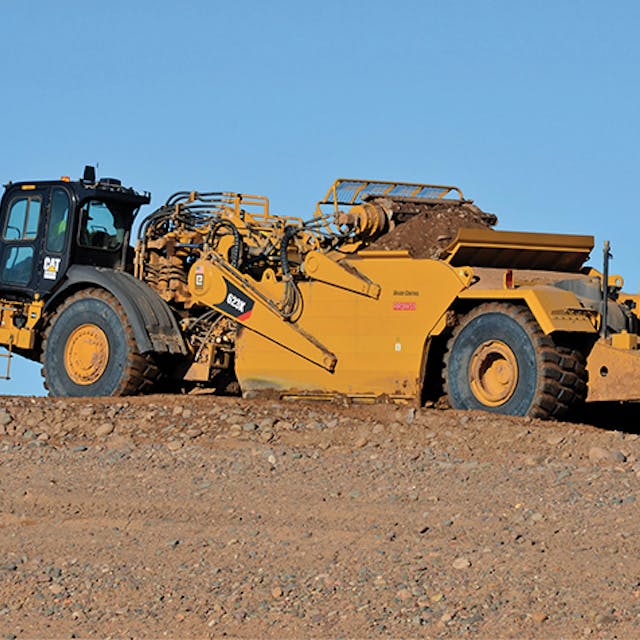
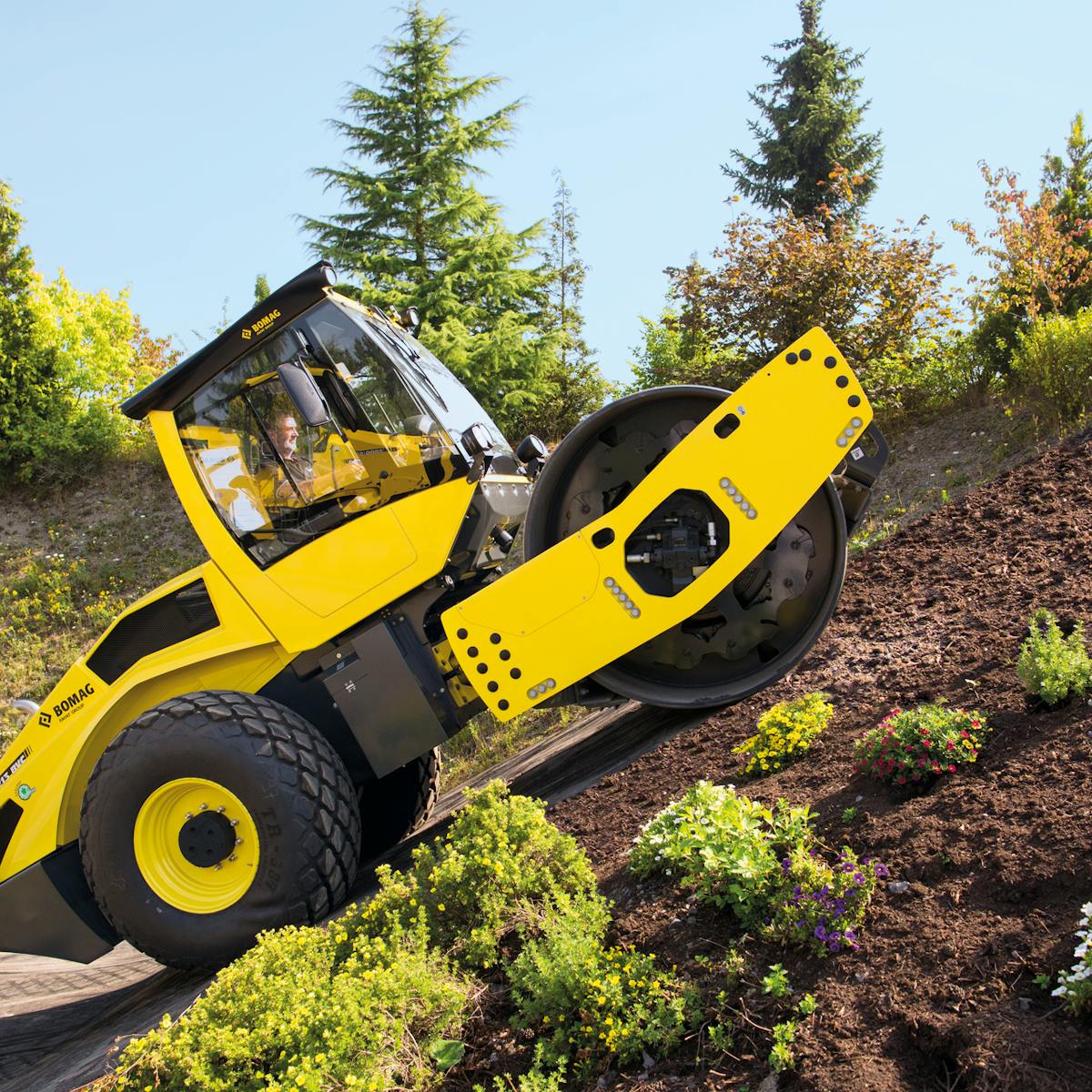
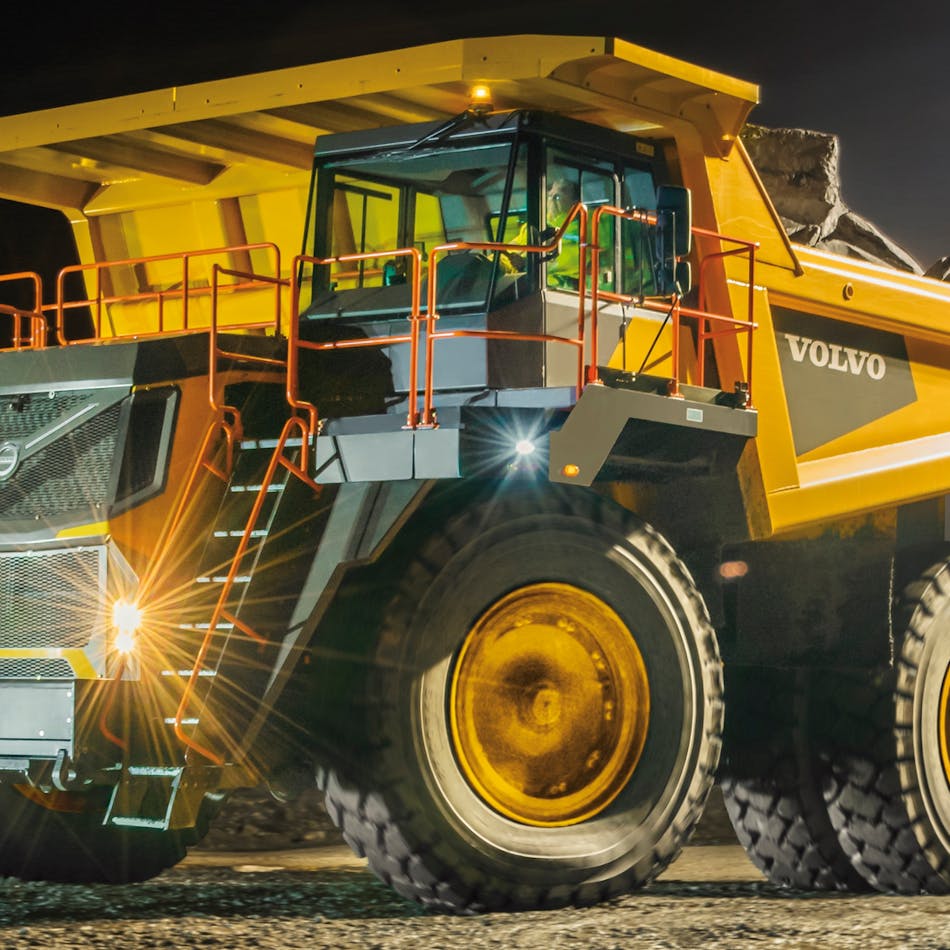
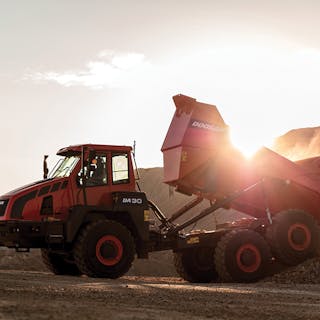
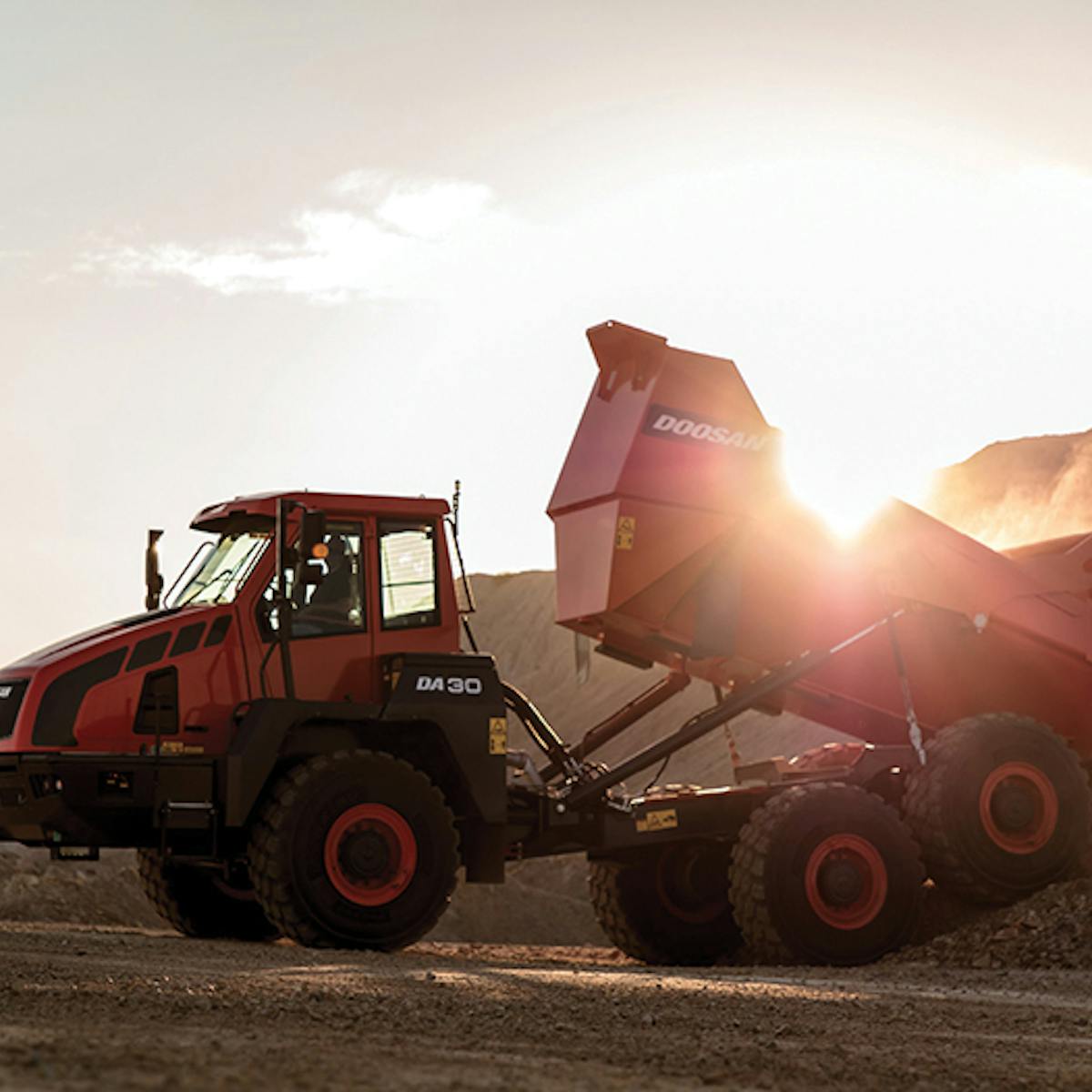
| Dump trucks are getting better all the time. That's why it's important to consult with your local dealers to establish the best choice for a project. |
Along with considerations of power for your pickups goes the research into how much space you need, inside and outside the cab. How many people will ride in your new pickup? No more than three? That would be quite normal for many contractors. So what kind of cab do you need? A standard cab offers either one bench seat or two buckets. There’s not much room behind the seating and there’s no second row for other employees. The extended cab offers more, with an extra bench seat (or jump seats) behind the front seating. The comfort of those extra seats should be evaluated before you commit to them, if some of your projects require considerable travel miles for your crew. As pickups earn popularity as the main vehicles for contractors and public works departments, the crew cab models gain acceptance, too. A crew cab has a second row of seating that is always there (as opposed to the options of an extended cab) and it offers four doors for easy ingress and exit. We have used the words standard, extended and crew to describe cabs; different manufacturers call their versions by different names.
How much space do you need in the bed of the pickup? Is it going to be the place where you can throw anything? Hand tools, small power tools, materials, the occasional attachment? Allowing workers to toss anything into the pickup is not a good idea. It’s a habit where items can be broken by heavier objects landing on them, and it creates chaos. Your pickup bed should be a well-organized place rather than a mobile trashcan. Even compact pickups offer good space for organized storage and transportation of materials and equipment needed onsite. If there are certain materials (like plywood sheets or trench shoring components) you carry frequently to your job sites, your pickup should be able to handle them easily and enable your workers to load and unload without difficulty. Again, it’s a matter of specifying the pickup that will do exactly what you need.
 |
Photo: Sterling |
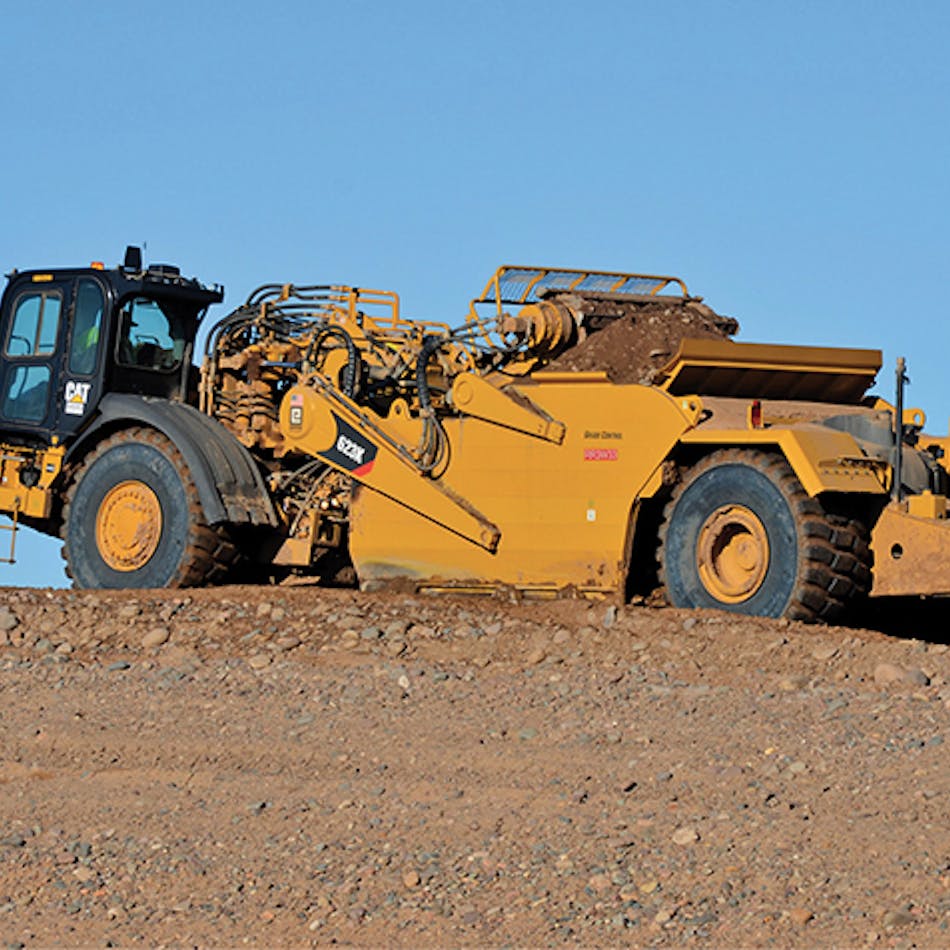
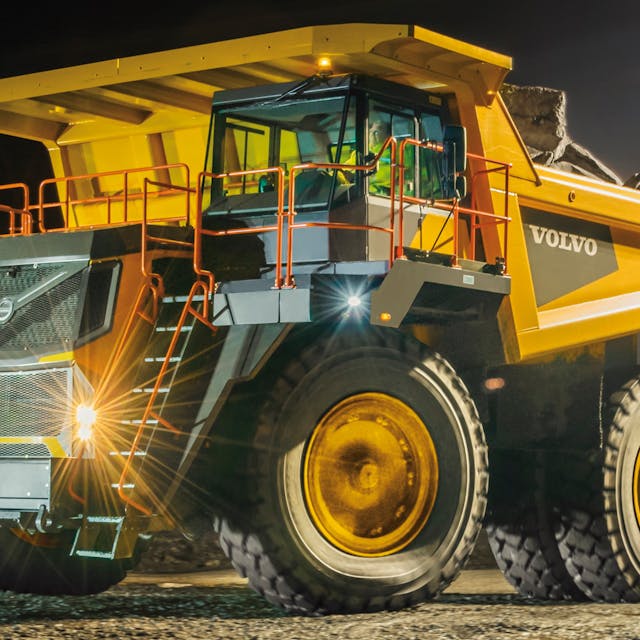
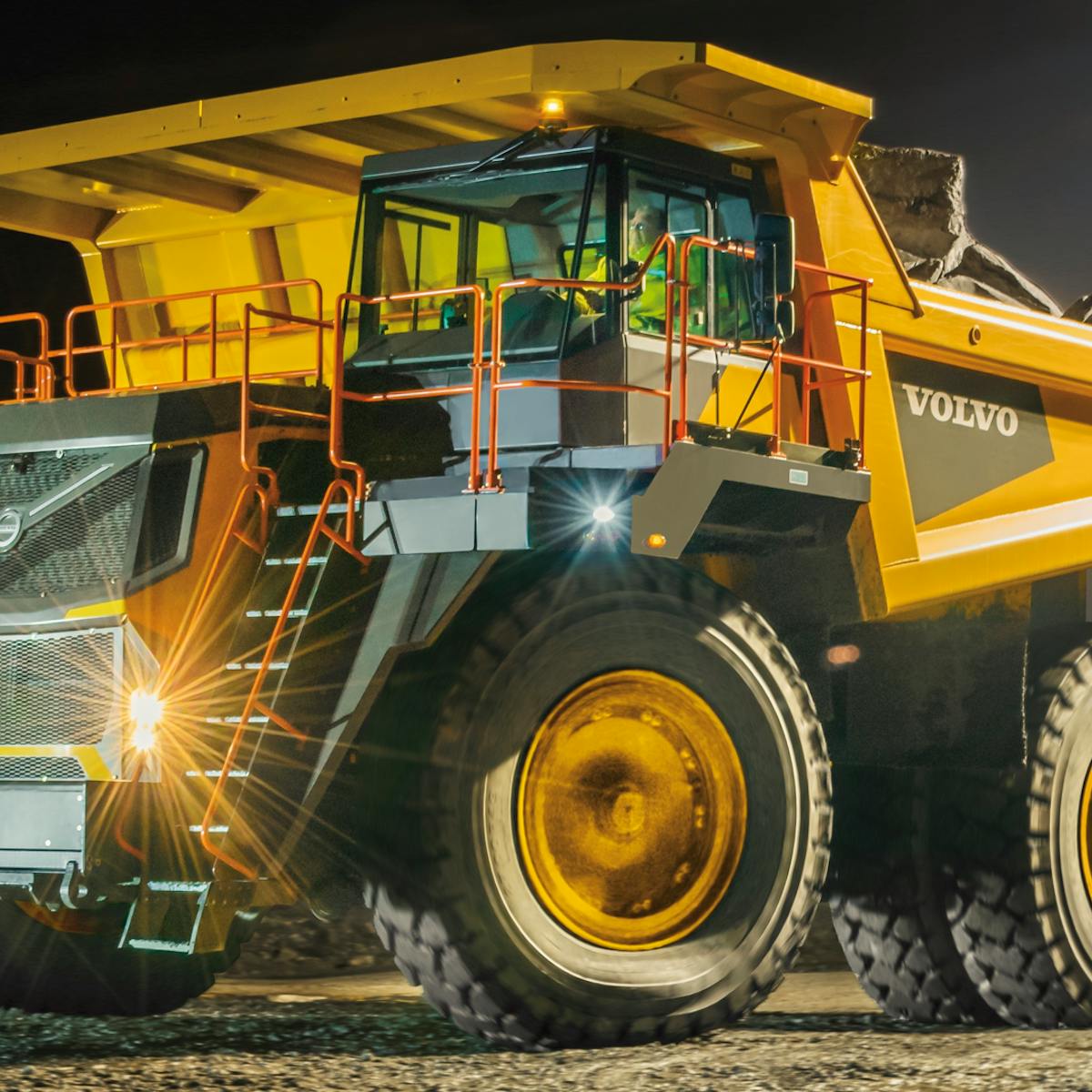
| Dump trucks have proved themselves reliable and long-lasting. |
Rigidly Efficient
When dump trucks are referred to as “rigid,” it may sound negative. That’s not the intention or the reality. They are rigid (only as opposed to articulated) in that they are strong and reliable, steadfast, constant, and unwavering. Rigid dump trucks don’t cave in. They don’t flinch at the concrete slabs, debris, gravels, and material mixes that are tipped or thrown into them. Look around your own community, and you’ll probably see some dump trucks that have been working reliably for 15 years. They may not be bright and elegant now, but they are still going to the job site, collecting their loads and taking them away for disposal. How does a truck which is so battered and bruised by its users last so well?
The specs must be right,” observes Jim Looysen, director of business class and vocational sales for Freightliner. That means that your original needs must be met accurately—and that is your responsibility with a lot of help from your dealer. “It is impossible to forecast the life expectancy of an individual vehicle for an individual customer, because there are many variables.” Good, regular maintenance of the whole truck has to help more than anything. You cannot expect the manufacturer to know exactly what you want in your dump truck, but you can be confident that he will provide exactly what you say you want. In all matters relating to trucks (dump and pickup) a trusting rapport between dealer and contractor is most desirable. If you spec your new truck correctly, it could well last you 15 years.
As with all grading and excavation equipment, the operator is of prime importance for a dump truck. It’s a heavy tool, it’s a moving menace to those who are not careful in its presence. That’s why one of the key steps in allowing somebody to drive your dump truck is to make sure that he or she knows the hand signals and safe procedures for a two-person unloading operation. Educate your driver (yourself, if that’s who it is) about correct loading, weight limits, where to unload, and what kinds of ground to avoid if possible. A dump truck on a slope is prone to tilt sideways while it unloads, so be sure to unload from a stable, level position. Yes, you may have to clear an area for the truck to be positioned safely before it unloads. Some aspects of wise loading, driving, and unloading are second nature to those who have operated dump trucks for years, but I was reminded just two weeks ago about taking anything for granted.
The owner of one of our local ready-mix companies is the best person I have ever seen in the operation of a dump truck, whether for concrete or gravel. His accuracy in forward or reverse is a work of art. The other day, one of his employees was delivering some gravel for me, saying how much easier it was do that in a small town like ours—much easier than in the bustling community in Wisconsin from which he had recently arrived after years of dump truck experience. Then he snapped a telephone wire above the truck. It’s like tire inspections. Do them every day even if you’ve already done them every day for 15 years. Each new site for a dump truck is ... a new site. Check the overhead obstacles, the surface obstacles, and hazards every time at every site.
Constant Improvement
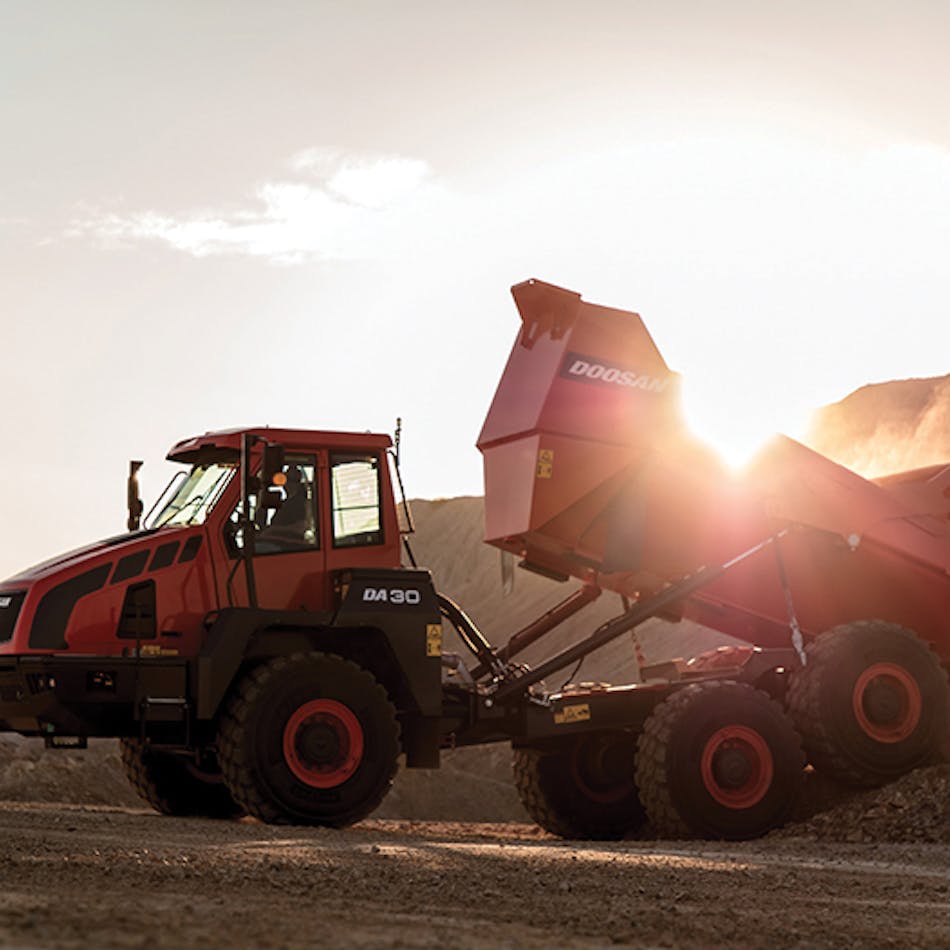
Dump trucks are getting better all the time. That’s why it is important to consult with your local dealers to establish what is available, what is new that could be just right for your projects. The continuous updating and refining of trucks is in response to requests from users and you can be sure that manufacturers are providing configurations not just to demonstrate their own engineering skills but to satisfy the field demands of customers. There is a trend, for example, to think of a dump truck as a tractor with a trailer, not merely as a heavy-duty, single configuration, single-duty vehicle. “There is no set standard for a dump truck,” advises Fernando Perez, manager of vocational sales at Freightliner (which also has Sterling and Western Star in this sector). “Changes in bridge laws around the country have prompted contractors to look at purchasing tractors. The dump trailer on a tractor may be 8 feet longer than your average dump truck, and it will carry more payload. It meets bridge laws for axles, and the same tractor can also pull a trailer for transportation of construction equipment.” For those who tend to operate at bigger sites and at greater distances from home base, a tractor plus trailer(s) setup may be most practical and economical. It’s still a dump truck, but it’s an equipment transporter, too.
A product that caught our attention yesterday is aimed at other regulations that are appearing in the world of dump trucks and trailers. No Idle regulations seem to be increasing nationwide but Retriever (a division of Up-N-Atom Inc. in Waukesha, WI) has developed a truck bed that can load and unload up to 30,000-pound payloads, with the truck’s engine off. The EPA has estimated that a typical truck for equipment transport idles an average of 15 minutes per stop. Retriever believes its No Idle System is a first in America. It uses the truck’s air system (not the hydraulics) for the truck bed power. It can reduce the idle time for equipment deliveries by as much as 95% and produces much lower emissions. The system works in conjunction with the truck air system. Once the compressor has filled the truck’s tanks, it continues pumping until the 60-gallon No Idle System tank is filled to 120 psi. Under normal driving conditions, it takes between four and six minutes to get the system up to its full operating pressure.
You can tell what other grading and excavation contractors are requesting for their dump trucks by the innovations that manufacturers have designed, tested, and produced for their customers. There will, of course, be differences of opinion about the best way to approach a design problem. There will also be more than one satisfactory solution. Western Star (family with Freightliner and Sterling) believes in steel. The cabs of Western Star trucks are made from double-sided, galvanealed, stamped-steel components welded together to give a frameless, monobody-type unit. If you need special options for your truck, Western Star will supply them. Such options could include factory-installed lift axles (up to four) to meet those bridge law requirements; a severe-duty cab; dual-steering front axles; tridem drive and all-wheel drive. Components like fuel tanks can be mounted where you want them (to give maximum ground clearance, for example). For the rear axles of your dump truck, you can get 110,000-pound planetary gears from Western Star; they lessen stress on individual gears. There are so many options available for today’s dump trucks, to make them more efficient, more economical. That fact emphasizes again why it is so important to work with your dealer for the best specs.
Sizes and Overlaps
Do your dump truck drivers have commercial driver licenses (CDLs)? In the medium-duty range, Peterbilt (division of Paccar Inc.) has recently announced the arrival of the Model 325, calling it “the first vehicle dedicated to the specific needs of the Class 5 market.” “It’s a new model for customers seeking a non-CDL, easy to operate, reliable, and affordable truck in the rapidly growing Class 5 segment,” notes Bill Jackson, Peterbilt general manager and Paccar vice president. The Model 325 is rated at 19,500 pounds in a straight truck configuration. Front and rear hydraulic disc brakes are standard (with ABS) and a six-speed manual transmission. This model joins Peterbilt’s Model 330, Model 335, Model 340 and cabover model 220 and Model 210. The 330 is a Class-6 truck that can also be configured for non-CDL operation. “We have trucks to serve customers in all the medium-duty markets,” adds Scott Pearson, Peterbilt assistant general manager, sales and marketing. “From Class 5 to Class 7, we have a complete lineup of conventional and cabover trucks. Peterbilt has a dealer network comprising 238 locations across Canada and the US.
That medium-duty range can be confusing. It’s that (very practical) range of vehicles that are so popular with delivery companies but it also seems adequate for many contracting needs. In recent months I’ve notice more smaller “trucks” collecting, delivering, transporting, and hauling contractors’ equipment. Names that spring to mind are the big Ford and Chevy pickup chassis, Mitsubishi Fuso, Peterbilt, Sterling, Unimog, and Kenworth. If your truck needs are usually for small loads, it may be worthwhile investigating the medium duty trucks from all manufacturers. That range is used for trucks from Class 3 to Class 7. That’s a lot of the trucks in service today.
 |
Photo: Western Star |
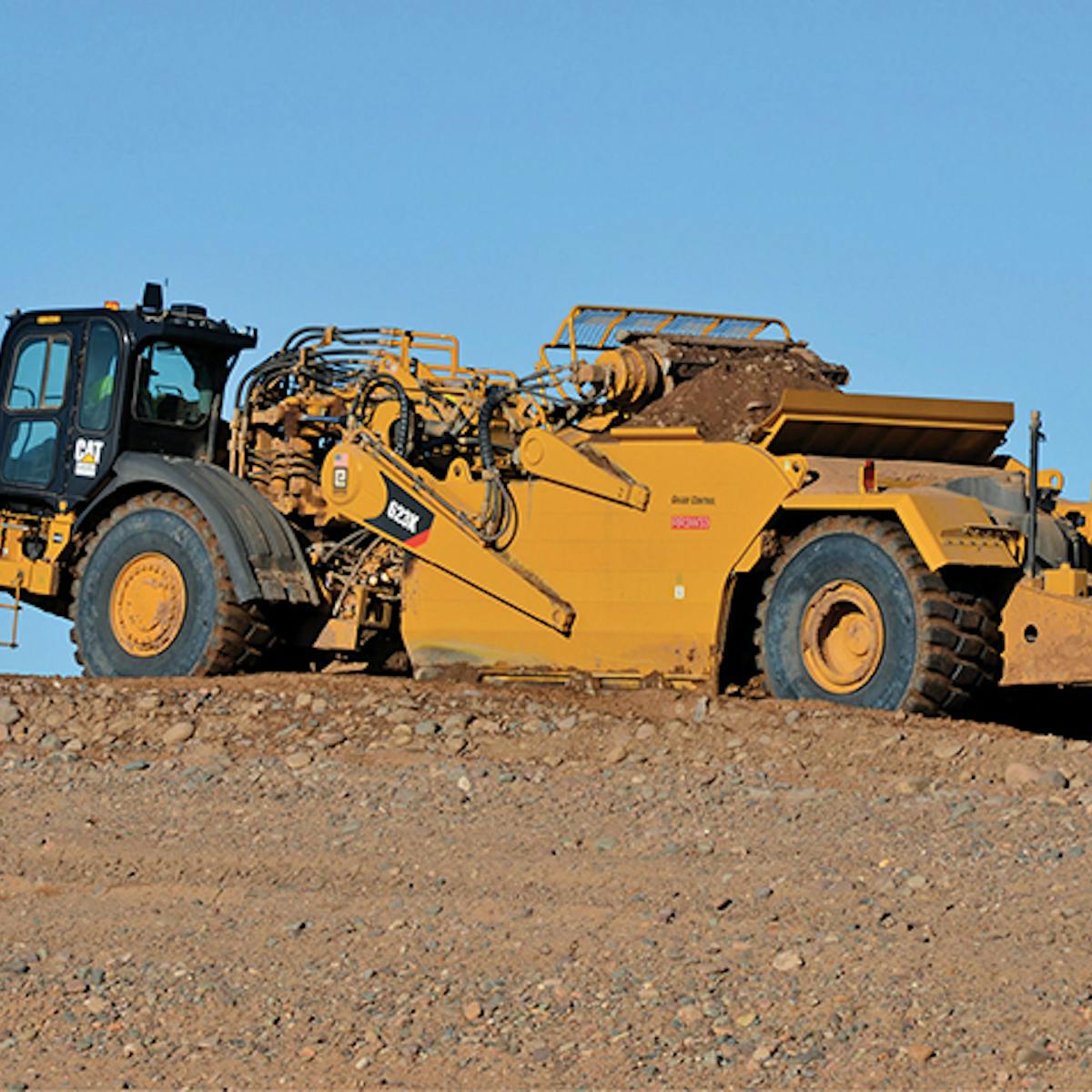
| Rigid dump trucks can handle rough terrain at many sites. |
The dump body and chassis on International Integrated Dump Trucks are engineered as a single unit to give durability and higher performance. There are the International 5000i Series and the 7000 Series integrated dumps. For all the hard work, bad weather and hostile ground that the 5000i trucks endure, they seem to last well, carry big payloads, and have an excellent reputation for maneuverability. The latter is one reason that dump trucks at the top of contractors’ priority lists are so popular; maneuverability is essential because all job sites are not measured in acres. The 7000 Series is described by its manufacturer as “severe service workhorses, pure and simple.” International dump trucks have been at it for a century. Yes, they can be specified to handle the maximum bridge-formula payload, and you can also get factory-built, set-forward, all-wheel-drive axle configurations. On the 7000 Series, you can request a set-back front axle for even better maneuverability. On International trucks, the company’s Diamond Logic electrical system will simplify your troubleshooting while offering enhanced diagnostics for more, profitable uptime.
Mack offers the Granite Series of trucks and stresses their light weight. With a combination of composite materials, ductile iron, and aluminum parts, these trucks lost hundreds of pounds of weight. Mack assures us there has been no loss of durability. Like trucks from other manufacturers, the Granite Series has excellent accommodations for the driver. Along with improvements in the engines and dump sections, manufacturers have paid good attention to the needs of the dump truck drivers. Today’s versions are considerably better to operate than those oldies we see around town.
aintenance information for the Mack Granite trucks comes through real-time sensors and not from preprogrammed schedules based on mileage. The optional Guard-Dog monitor tells drivers when engine oil and selected filters should be changed, and when fluid levels are low.
Basic Changes for Medium- and Heavy-Duty Trucks
Hybridization is one of the few technologies that both reduces emissions and increases fuel economy. A group called the Hybrid Truck Users Forum (HTUF) is trying to speed the commercialization of heavy-duty hybrid technologies. The Web site is www.htuf.org, and a good contact there is Bill Van Amburg or Jasna Tomic. With some urgency to reduce petroleum use (for both financial and security reasons), hybrids can be an important investment. If you also consider the reductions such vehicles can produce in both smog-forming and climate-change emissions, their role becomes even more significant. Hybrid vehicles are not just a passing gimmick; They are an attempt to make our truck future better in all respects.
As with most innovations in technology, initial low volumes of production make the prices higher than businesses can usually afford. Public sector support is required to overcome this near-term barrier to long-term benefits for all. “Direct sales incentives to support leading-edge fleet purchase and use of hybrid trucks should be available over the next five years,” notes Bill Van Amburg of WestStart-CALSTART. “We need support for development and commercial-path deployments of the enabling technologies and pre-production vehicles that will expand hybrid truck use.” We should remind ourselves than any improvement in fuel economy for our trucks is a big success and not confine support only to those technologies that produce double-digit savings immediately. The Energy Policy Act EPAct (EPAct 2005) was a well-intentioned start, but, say industry observers, it has faltered with goals too high and programs too short to achieve better results. “Incentives need to be longer lived, say, 10 years,” advises the HTUF. “They need to start higher than they have and decline over time. They need to encourage a range of meaningful improvements, not just the absolute highest achievements only.”
We can expect updates and enhancements for pickups and dump trucks as the year progresses, and the source of most of the improvements is you, the person who drives these hard-working vehicles in our sector. Our greatest challenge seems to be that there are so many configurations and sizes available that we’d like five or six of them, just because they are so good. Let’s say it one last time: Go to your dealer to develop the specifications of the pickup or dump truck you need. When the two of you have decided what would be best, you can be pretty sure it’s available and that its manufacturer will produce exactly what you need.
Author's Bio: Paul Hull is a frequent contributor to Forester Media publications. |
Advertisement]