

























September-October 2011

Software Harmony

Linking and combining technologies can bring profitable power to the job site.

Article Tools

  • RSS
  • Save
  • Print
  • Email
Create a Link to this Article

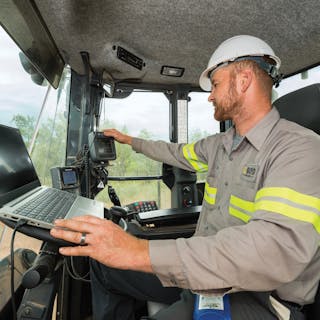
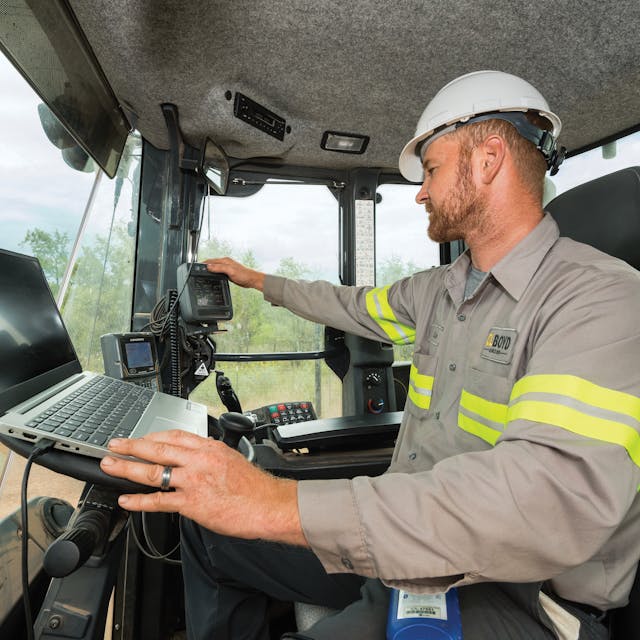
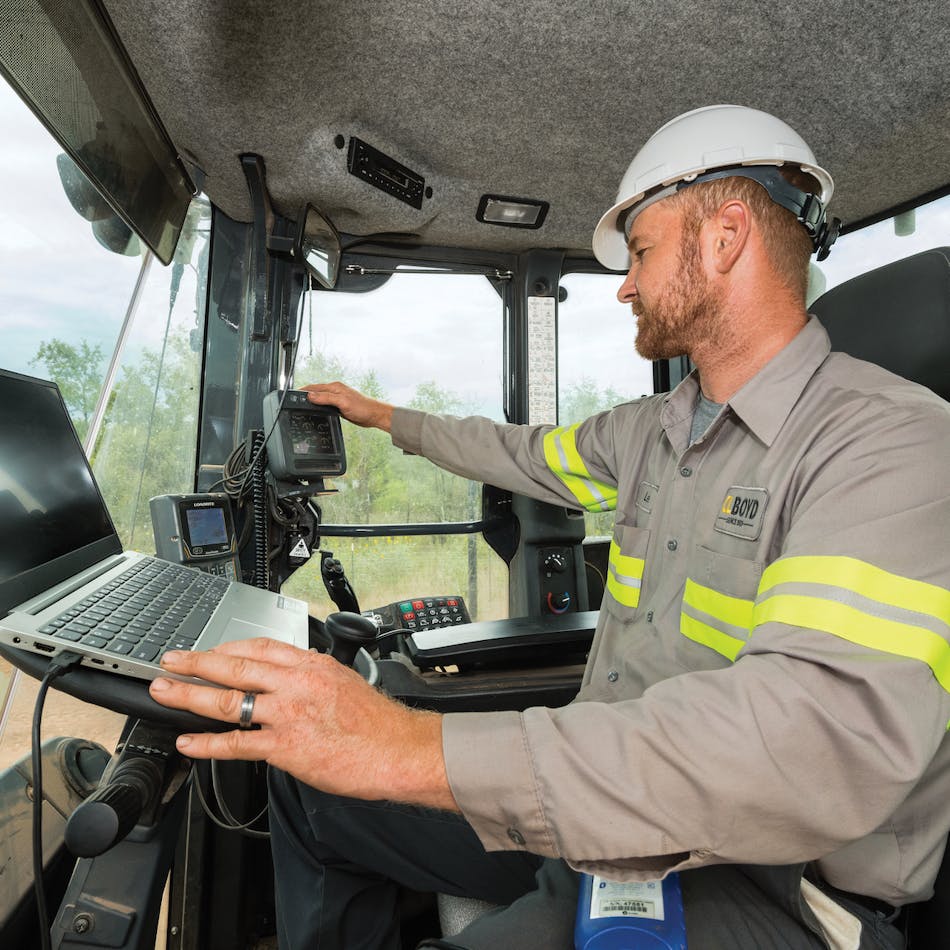
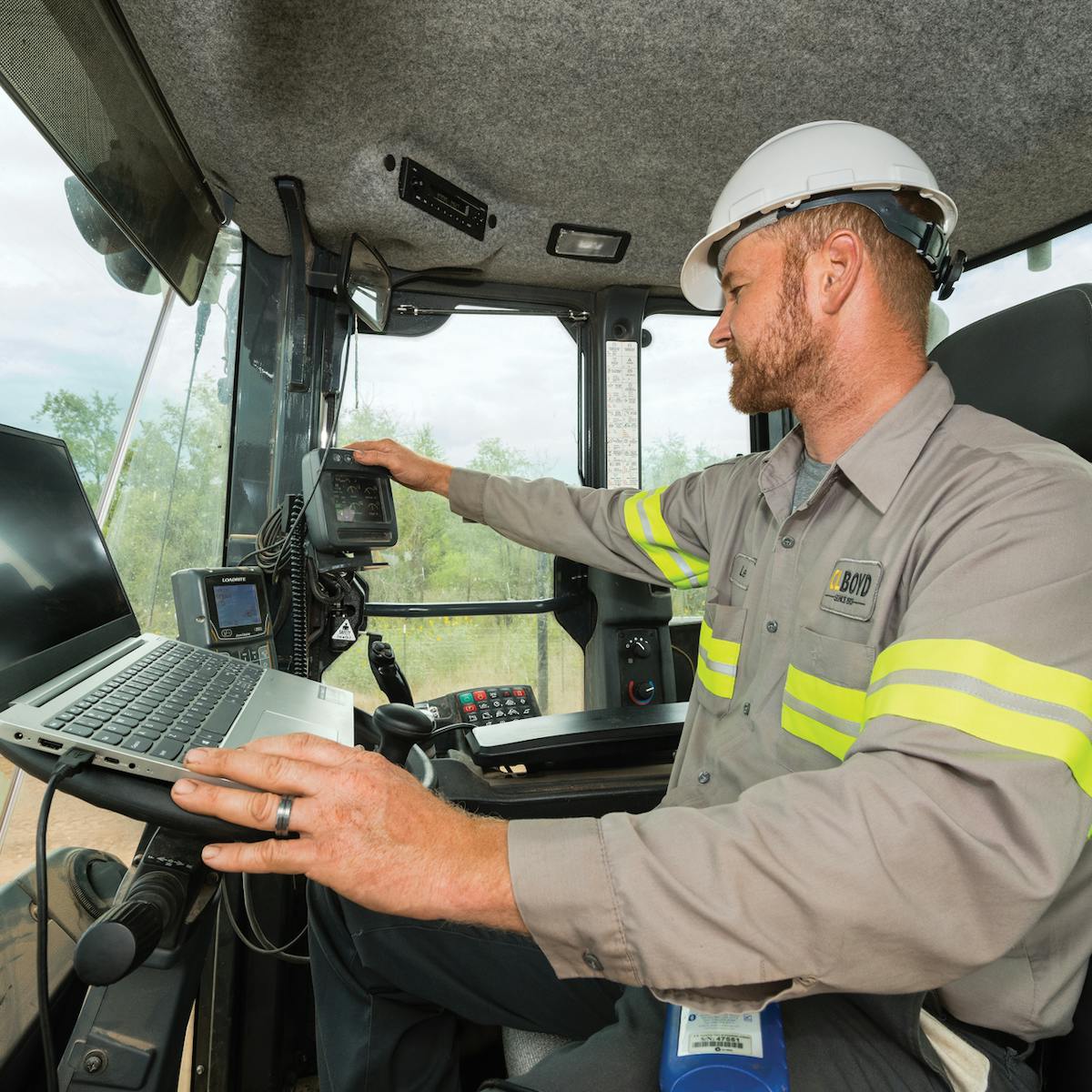
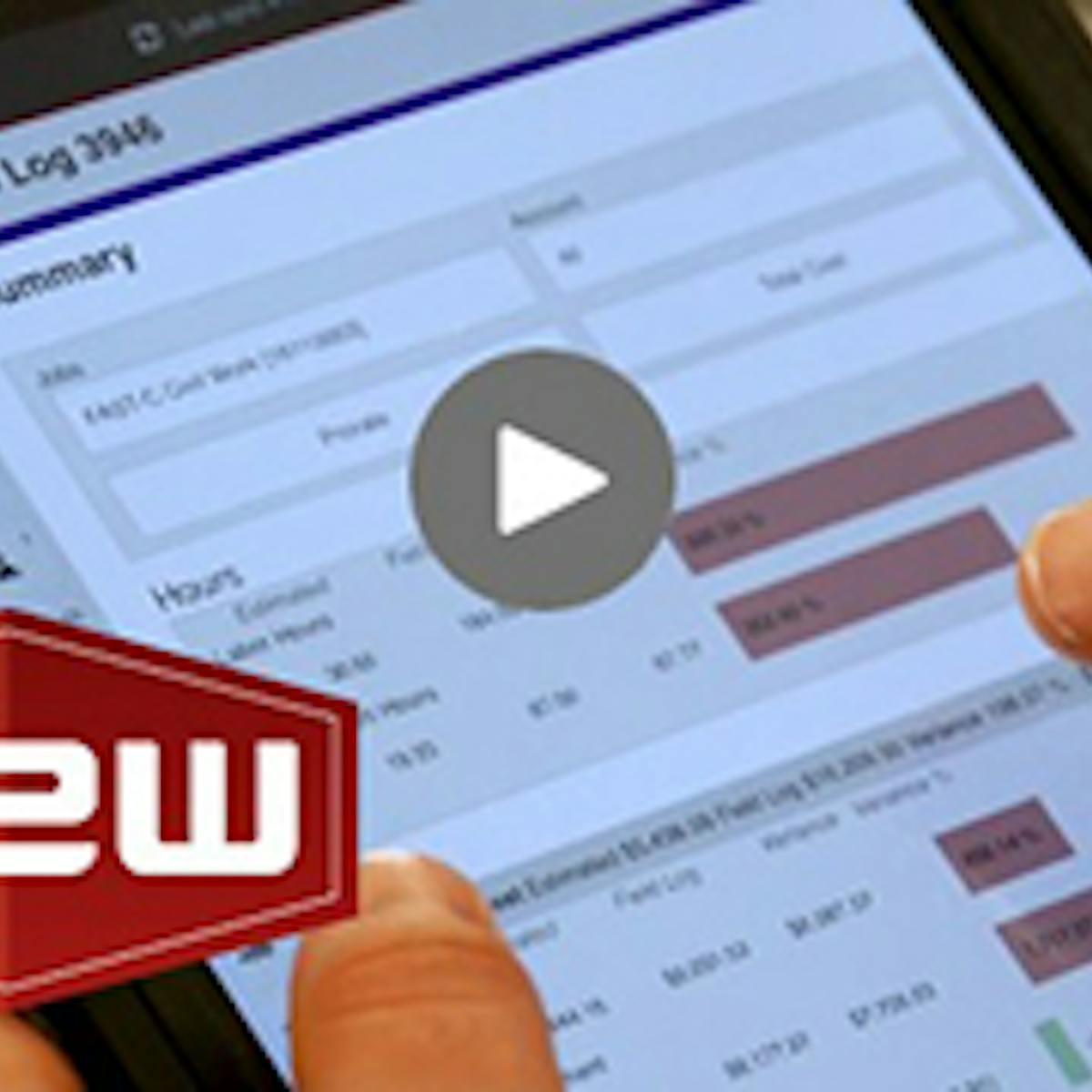
Photo: HCSS You can be anywhere to stay in touch in real time with your work.

Thursday, September 01, 2011

By Paul Hull

Comments

Even the smallest project is made up of several bits and pieces, isn’t it? Equipment, employees, local regulations, and time are some of them. They all combine, like voices in a choir or singing group, to produce a harmony that is pleasing and profitable. When we are considering software that can make our construction projects more efficient and profitable, a most important question must be: “How would these different software programs work together to give me a complete conclusion?” The conclusion for all work is that it be profitable and well done.

There are many software programs that address particular aspects of construction, just as there are many machines that accomplish the tasks involved. Nobody would expect to do a complete job with just an excavator, just a loader or grader. Except in the smallest firm, nobody expects one employee to be capable of every task, including bidding, machine operation, reporting, accounting, billing, and scheduling, material management, and safety. Software, however sophisticated it might be, does not achieve everything in one program. If we are going to use several programs and people to help us with all the tasks involved today (from bidding to machine control) we want them to be a team, a choir of assistance, harmony.

A few months ago I quoted John Chaney, president of Dexter + Chaney, on this very subject. It’s worth reading again today, when words like connectivity, collaboration, combination, coordination, cooperation—and other words beginning with co- and ending in –atio—seem to be on the lips of many people in the information technology (IT) side of business. “Collaboration has been a buzzword for a number of years,” confirms Chaney, whose company has more than 30 years of good experience in this field. “Software and technology vendors hold out the promise of improved connection and collaboration but, because their systems are proprietary, because they require all collaborators to have the same applications loaded on their computers or mobile devices, they haven’t been able to deliver on this promise. As we’ve seen, time and again, it can be difficult enough to get everyone within the same company using the same systems, let alone others outside the organization.”

Photo: Caterpillar
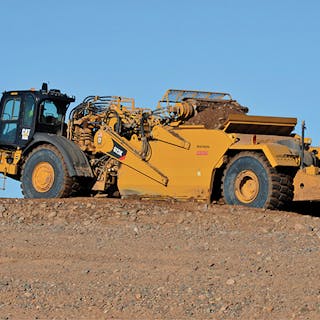
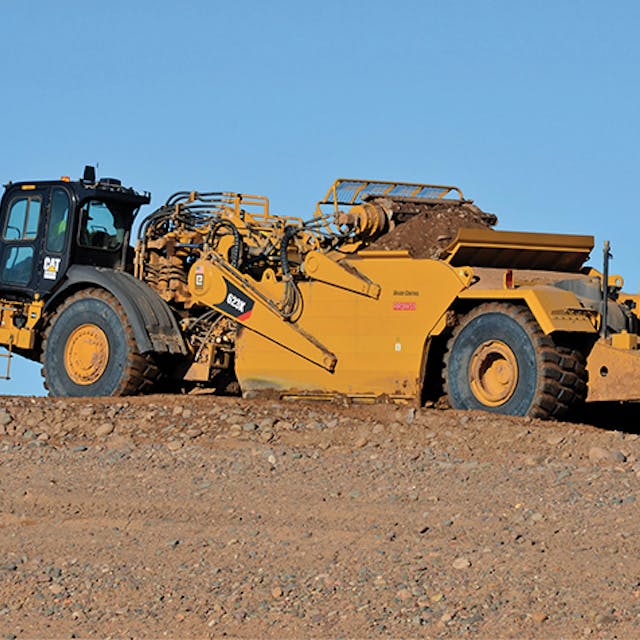
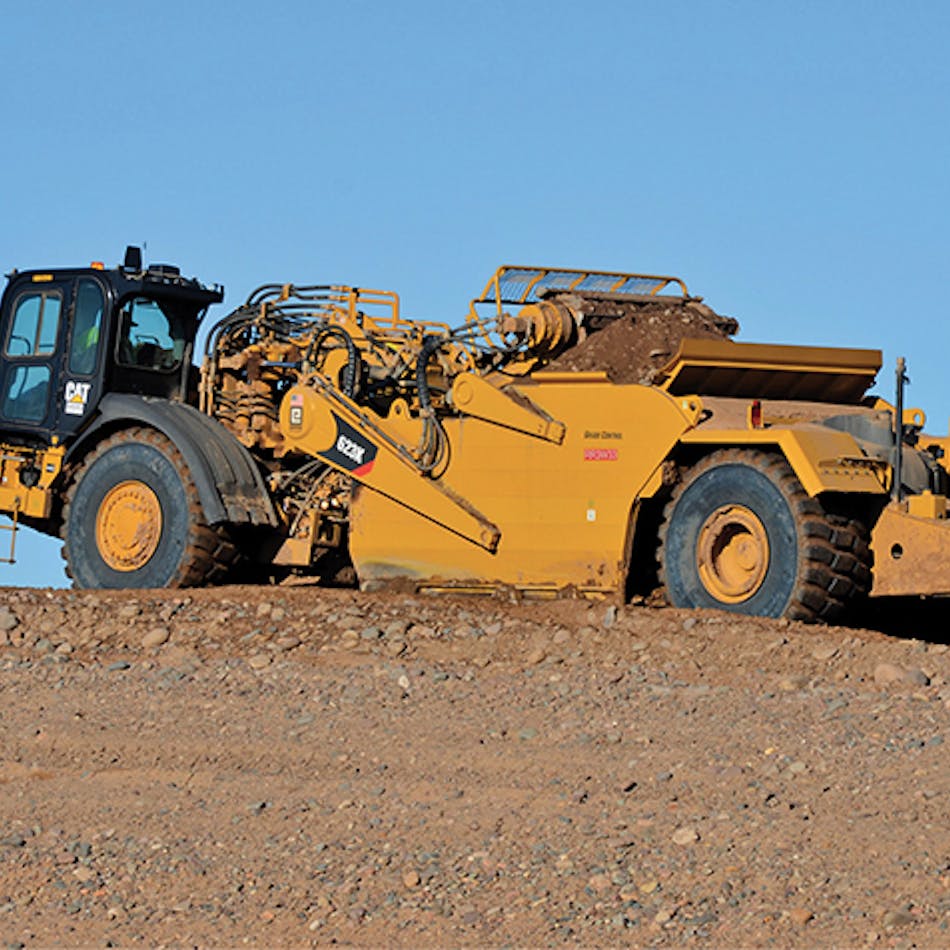
Caterpillar now has remote control systems available for dozers.
Now consider the Web, the Internet, that place that used to be somewhere-out-there but is now everywhere. “Think of the Web as the computing platform,” advises Chaney. “With no software to download, maintain, or upgrade, the only barriers to shared use of an application are access to the Internet and a subscription. Partners on a project can log in anywhere, at any time, from any device, and share common information and a common virtual workspace. Owners, prime contractors, subcontractors, and vendors can share a common web-based workspace that is more than just a repository for shared files. With full-feature applications available online, they can work together seamlessly to produce bids, track submittals, manage projects, track change orders. They can do everything they have to do together now, only in a dramatically faster and more efficient environment.”

Job Site Management
Let’s never forget that the information technology is only part of the job. Let’s never forget the importance of the machines at the job site or the people operating them. Topcon has been a leader in positioning systems and machine control for many years but it would be wrong to imagine that Topcon’s help stops with the guidance of the dozer and grader. The company has addressed the challenge of having everybody and everything work together with its SiteLINK 3D system. This system puts all the essential data, from all of your machines at all of your jobs, at your fingertips. Literally. It links (coordinates, connects, combines) your equipment, your job trailers, and your main office. All information from the job site is available to people in the office via the Internet; that gives you access to real time and historical data. All data from the job, plan revisions, and files elated to them can be exchanged easily and immediately within the system. All users are updated immediately.

What are we trying to achieve practically with job site connectivity? The answer was put well by Brian Longobardo, product manager for 3D Machine Control Products at Topcon. “The goal of a job-site communication system is to exchange information from a rover (such as a machine, truck, or surveyor) to a central office, or to other rovers,” advises Longobardo. “Topcon’s Sitelink provides onsite communication between all machines, people, and the office through a Wi-Fi or cellular network connection. This can prove beneficial to all size contractors, job sites, fleets, and applications. A dirt contractor that has a small crew of surveyors and only a machine or two can benefit. Because Sitelink can be global and does not have to be job site based, the operator on the machine at the site can benefit. If he is at a job site without his surveying crew, he can receive updates from surveyors without the time and costs of having to go back or waiting until later.”

With SiteLINK 3D, survey crews can get real-time updates to site plans, and they will be using the common, updated file with all the latest revisions. Think of the rework that can save! As to the machines, SiteLINK 3D gives you real-time views of their exact positions as well as monitoring their activities and any delays that have happened. The user of the Topcon system can interact with specific machines to provide remote support for solving onsite problems—without having to visit the job site. What a savings of time and fuel! The system builds upon existing 3D grade-control systems, and you can view cut-and-fill mapping on each machine on all projects, as it happens. You can make the most of your operators’ time and save delays with remote access to 3DMC control boxes. For the record (and breaking a few records) 3D-MC² is Topcon’s way to increase dozer speeds and accuracy by as much as 200% over existing 3D systems. It’s so accurate that, sometimes, a motor grader is not even required.

“Our industry should (and will, eventually) be moving toward a scenario in which all applications can be accessed from any device using simply a browser, including complex enterprise software such as our Spectrum Construction Management suite of applications,” observes Wayne Newitts, marketing director at Dexter + Chaney. “This is exactly where our next version of our flagship product is going. Meanwhile, any and all of our applications can be deployed across remote work sites. Field employees can run our current version of software, with our Spectrum Mobile application being perhaps the best example.”

With years of successful experience with many customers, Steve Warfle of InSite Software, tells us the practical advantages and flexibility of today’s technologies. Take, for example the beginning steps of many projects. “Almost all takeoff we see these days is with electronic files,” says Warfle. “With InSite Sitework, a project can be bid from a laptop, the results sent wirelessly to co-workers for review, and those results can be prepared for electronic submission. If the job is awarded, the same data can be massaged, using Field General for use in layout and GPS machine control during the project’s construction. In a tight economy, this enables the small or large company to get more out of mobile personnel, employees who are often wearing many hats.” InSite Software works together with leading machine-control systems like those from Trimble, Leica, Accugrade, Topcon, and Sokkia. A 3D-Live drive-through machine control simulator allows the user to make corrections to the model on the fly, as it is navigated. For road models, you can generate them by combining the profile data and design centerline.

From Before the Beginning to the End
Does the job begin when the operator starts the excavator or the dozer? Does it begin when the grader is lined up ready to do its run in one pass? No. The job begins when you get the contract to do it. Today, when margins are skinny and money elusive, winning the bid may be the most important part, the absolutely necessary part, of every job. It is essential, then, that your winning bid is accurate and relies on equipment, crews, and materials that you know you can have available at the right time.

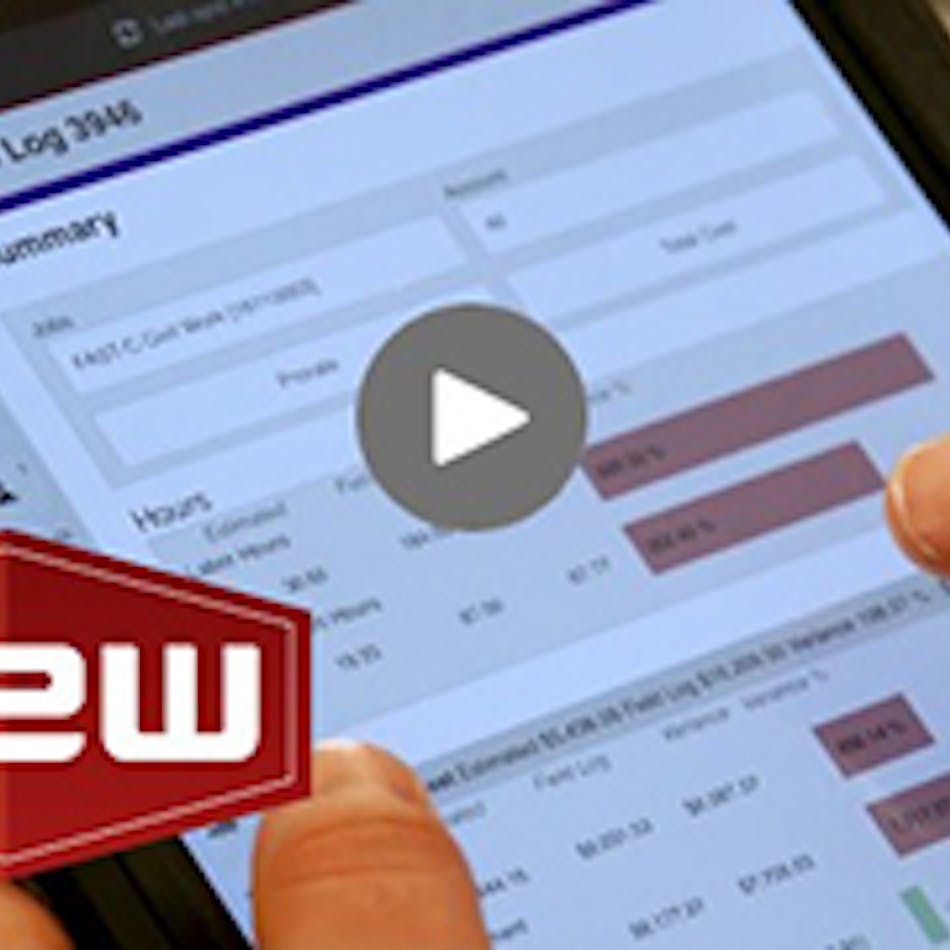
HeavyBid may be the most famous of the programs for contractors from HCSS, but it is only one of an array of programs from that company that promotes the very concept of connectivity for all job site matters. Developed over 25 years with constant advice from contractors in construction, HeavyBid produces better estimates, and more than you are used to producing. It maneuvers you through those traditional stresses of bid day itself, today’s stress of competing with competitors for less work available, and it helps you work with other companies and joint ventures with those ever-changing plans and scope. It starts at the very beginning, before you put a blade into the ground, and it helps you get your blade into the ground by helping generate a practical, winning bid. Thousands of contractors have used this program successfully. As mentioned above, HeavyBid is one of the programs from HCSS. There is also HeavyJob, field management software that allows foremen to capture electronically their labor, material, and equipment charges at the end of the day and compare daily productions against estimated productions. This allows the foremen to see whether they made money on the items of work for the day so that they become “knowledge workers” and can generate what-if scenarios to try and figure out how to do more work for less money, and actually have the tools necessary to making those judgments.

Photo: Trimble
Trimble has its own programs and cooperates with other manufacturers.

“The most successful companies in the future will embrace the use of technology at the job-site level,” asserts Steve McGough, chief operating officer of HCSS. “The next generation of construction professionals look to make a difference, and for a company that will empower them to make decisions in the workplace. Margins are being squeezed, and the need to track how you are doing on a job is more critical now than it has ever been. Technology provides the framework for knowledge workers, the front-line people that need timely information to make better business decisions. It’s a win-win business model. Your company gets an empowered work force with employees that have voice and critical role in the success of the company. In my opinion, margins on public jobs will be squeezed for the foreseeable future, given the limited state and federal budgets. The companies that survive this downturn will be the ones that control their costs and become more efficient in their day-to-day operations.”

“The days of separate technology solutions for each department within a grading and/or excavating contracting business are coming to an end,” is how Maxwell Systems assess the situation. “New, all-in-one solutions are enabling contractors to communicate and collaborate more efficiently, increasing productivity and profitability on projects.” A good example of that philosophy is Maxwell Systems ProContractorMX, a complete construction software solution for end-to-end control of critical business operations and seamless workflow—from takeoff and estimating through job cost accounting and project management, and ultimately for critical reporting and analysis. It’s a flexible solution that contractors can grow into as their business needs change. This comprehensive, single solution handles the complexities of the entire project life cycle and provides versatile features that meet the business requirements of every role within an organization. It can allow a team to communicate faster and react smarter, making contractors more competitive and profitable. ProContractorMX gives project managers the ability to streamline business processes in the office and in the field. With job cost tracking tools, they can profitably manage projects, committed costs, change orders, and more.

With the solution’s Mobile Connect app and the iPad mobile device, contractors can have important documents and data about their projects with them wherever they go, allowing them to manage projects efficiently and proactively. It eliminates the need to lug around an out-of-date, paper-stuffed job binder by using the solution to manage project documents electronically. With a convenient and consolidated virtual binder of all project-related information, contractors are able to more efficiently manage documents, minimize risks, stay on schedule, and maximize profitability on every project across their entire organization. With centralized, critical, real-time information, project managers have insight for informed decisions, and the flexibility to manage projects for maximum efficiency. Owners also have a quick view of all projects to see which are profitable and on schedule, and can see expected cash flow in total or by project. “Offering the construction industry an iPad app for project managers is an exciting accomplishment for our team,” said Jim Flynn, president and CEO of Maxwell Systems. “Project managers now have convenient access to valuable data and documents no matter where they are working on any given day. With the timely details to make confident decisions when on the go, they can more proactively execute projects, and so optimize profit and control costs. The iPad is an extremely intuitive mobile device and combined with our award-winning all-in-one construction management solution, ProContractorMX, it has the potential of revolutionizing the way construction projects are managed.”

Photo: HCSS
You don’t have to rush out to the remote site to see what is going on.

Think of It as a Science, not a Technology
Tele- on the front of word implies control from a long distance. We experience tele-something every day, as in television, telephone, telecommunications, telemarketing, telepathy, and telescope. Telematics is the science of sending, receiving, and storing information via telecommunication systems. It’s a science most commonly associated with vehicles, but it should also be associated with everything related to computers. For the contractor it means that you can know where your equipment is at any time (extremely useful if the machine is stolen!) and what it is doing, what it has been doing, and even if it is likely to go wrong in the near future. Don’t be put off by enthusiasm for telematics for car and truck fleets…in our business, fleets can be graders, excavators, dozers, and loaders. Generally speaking, any machine with an engine.

With your Volvo equipment you can have CareTrack. Whether you are at the office, on the road, or at home, anywhere there is Internet access you have a direct line to your fleet of machines and vehicles. You can see their location, their operating status, and approaching service needs. You can learn where the machines are, at what speeds they are being driven, and how much fuel they are using. Our earthmoving machines are a large capital investment, maybe the biggest for our business, so isn’t sensible and practical to know that we are getting the best return on investment from them? The information you receive from Volvo’s program is better than you could get from the driver or operator. Every 24 hours, CareTrack can present the previous day’s operating information in an easily understood manner. It’s as if you received a technical update on each machine. Or, if you prefer it, CareTrack can e-mail that same helpful information (to be collated once a day, once a week, or once a month). It can tell you how many hours an excavator has spent working in the different work modes available, or it can show you how much time an articulated hauler spent using the retarder or differential lock. You don’t have to be an IT expert to interpret the results! You can also, with Volvo’s CareTrack, establish time and geographical barriers for each machine, so that you will know quickly if it has left the work zone where it should be or if it is being operated at a time when it shouldn’t be.

Earlier this year, Caterpillar presented a completely updated Cat Product Link package to make it easier for equipment managers to make decisions that enhance productivity and reduce the costs of owning and operating. The innovations in Cat’s package use tough hardware and a more comprehensive use of improved communications system coverage to give more data and report it in an easy-to-use format. Product Link brings new harmony to the yard and job site. Using either cellular or satellite networks, managers can monitor exact equipment locations and key machine parameters. The VisionLink web-based user interface lets a manager focus on specific equipment through maps and views that can be customized. The user can locate and zoom in on a single machine, tracking the asset over a specified time period. By monitoring idling time and work time, managers can reallocate equipment to improve its use and, thereby, improve the return on investment. Your service team can monitor performance of the equipment and see what maintenance has been done on any piece of equipment. A click-through feature even allows the user to contact the Cat dealer online for parts and other services when required. A Caterpillar and Trimble joint venture company, VirtualSite Solutions, developed VisionLink so that contractors could efficiently manage mixed equipment fleets. The system also sets up site boundaries and security alerts to prevent unauthorized use or movement of equipment. By defining geofence working areas, you can set alerts for each machine on site to provide a warning if the machine is being used without authorization or being moved out of its permitted area.
One of the companies that has been a leader in the “Whatever will they think of next?” sector of construction software has been Trimble. It has its own products for grade control and similar challenges and it has joined with other companies to produce excellent tools for contractors in both earthmoving and paving. One that grabbed my fancy not long ago was the Digital Pen. Trimble’s Digital pen Construction Solutions let crews automate paper-based construction forms, as-builts, and building plan markups. Jobsite teams can use the Trimble DP20 Digital Pens to capture handwritten notes, plan markups, and from-based data. You can automate a range of paper-based data without changing the paper-based workflow. The benefits could be easy uploading, consolidation, and management of team data to improve team collaboration, and you can speed up payments to you with accurate documentation while reducing the time and money often spent on transcription. It’s a technology that promotes collaboration and connectivity at any job site.

Thanks to some good collaboration between manufacturers of equipment and software providers, it is possible (even mandatory!) today that you select technologies that can work together at your job sites. Insist on knowing if the programs you want to purchase will work with what you already have, if they will improve the profitability and efficiency of your projects in these times when jobs are difficult enough to win without any unnecessary impediments like equipment incompatibility or “Why didn’t they tell me that?” delays because of unconnected people and machines.

Another company that has a history of cooperation and collaboration is Leica Geosystems. Leica Construction Office represents the company’s philosophy of using the shortest possible path from design to field. Thanks to good cooperation with design software suppliers, Construction Office is an application that can import and export data formats that are already standard, but it can also manage data formats that may be specific to certain locations. Among the formats well managed are LandXML, REB, Ispol, AutoCAD DWG, AutoCAD DXF, and MX/Moss. Leica Construction Office is compatible with many different machine control systems, with the software supporting a good range of machine control systems and measurement sensors from Leica Geosystems and other manufacturers.

Comprehensive describes Leica’s technologies and explains their popularity. For improving stakeout accuracy and productivity, for example, you could choose Builder or RedLine Power Tracker while the PowerBlade group of systems will help earthmovers especially well. The PowerBlade systems start as simple ways to achieve good formation and subgrade leveling, while PowerGrade 2D and 3D systems for dozers, scrapers, and graders give a contractor ease of use, flexibility, and excellent precision at fast speeds. PowerDigger 2D and 3D perform similar guidance for excavators used for foundations, utilities, and drainage. If you are into paving, you’ll want to see Leica Geosystems’ PaveSmart system, a 3D machine control system for mainline concrete pavers. Experience in sitework assistance? Leica has tens of thousands of customers worldwide, contractors who rely on the company to pull it all together.

A few years ago, who would have tried fine grading with a dozer? Leica SP Technology lets you do that, fast and accurately. It gives improved hydraulic control that allows faster grading with impressive smoothness at high speeds. Dozers can now undertake more grading jobs. The broader advantage is that contractors can complete projects with less heavy equipment on site and they have a good chance of finishing ahead of schedule and under budget.


Author's Bio: Contributing writer Paul Hull focuses on topics related to technology, finance, and safety in the excavation and construction industry.


Advertisement]

What Do You Think?

Be the first to tell us what you think!

Post a Comment

Note from Beth Tompkins, Director of Education & Training: The content that appears in our "Comments" section is supplied to us by outside, third-party readers and organizations and  does not necessarily reflect the view of our staff or Forester Media—in fact, we may not agree with it—and we do not endorse, warrant, or otherwise take responsibility for any content supplied by third parties that appear on our website. “All comments are subject to approval

CAPTCHA Validation
CAPTCHA
Code:


Grading and Excavation Contractor Email Updates!

Get weekly news and updates through our Water Efficiency email newsletter!