






The Grading and Excavation Contractor Blogs

The Blogger

Trotti, John

More from this blogger

Grading and Excavation Contractor Editor's Blog

  • RSS
  • Save
  • Print
  • Email
Tuesday, December 06, 2011 6:15 PM

The Road to the Future

By: Trotti, John Comments

When you consider all that has happened in the last decade, it’s tempting to say that everything has changed. But has it?

Yes, there have been startling leaps in the equipment and the systems that allow us to wring ever-greater productivity from them. Yes, we’ve witnessed wholesale changes in the regulations that define so many of our actions. For certain we’ve seen a significant turnover in our work force in terms of age and background. So here we come to the end of another year still enmeshed in a struggling economy with a high degree of uncertainly as to what will happen next. So is there a bright spot in the offing, and if so, where?

When I look back at my very first Editor’s Comments, I see that even in the lap of tremendous upheaval, what was true then is no less true today…if anything, even more so. Consider that after nearly four tough years, you’re still here, which means that you’ve managed to do what was necessary to survive, and having survived, your chances for doing so it the future are better than ever.

You know what the margin between success and failure is. You know that every time you turn around, the competition has gotten stiffer. The insurance rates higher. The regulators meaner. The number of jobs out there fewer. Even if you’ve been around for a while and carved out a niche for yourself, every day you go to work you find yourself facing seemingly insurmountable challenges…and overcoming them.

In that first issue and subsequent ones as well, we clicked off what we felt were the keys to success, eventually encapsulating them in what thereafter we’ve considered the cornerstones for the publication. Succinctly put, they are:

Work force—Your workers’ commitment to you and your goals is the single most important asset you have. When you look at the people who work for you, do you like what you see? If so, you’re on the right track. If not then it’s time you reexamined your own practices as the first step to change.

Safety—It’s hard not to look at safety in terms of accidents, but that’s only part of the equation. True, they’re the yardstick by which others—notably OSHA, insurers, and potential customers—will evaluate you, but they’re only the outer manifestation of a more fundamental condition. Safety is a process that leads to where every single one of your employees, when he or she looks in a mirror, realizes, “This is the person responsible for my safety,” and that vision starts with you.

Regulatory compliance—There are the direct measures of regulatory compliance, where failure is reflected in such costs as fines and make-goods. But, as with safety, the real measure lies in an inner commitment to doing things the right way rather than just meeting the prescribed requirements. While it may be tempting to say to yourself that “good enough” is sufficient, you know that anything short of excellence will come home to roost ... and if you don’t, your customers will.

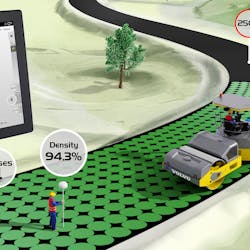
Technology—Change is upon us. Such features as integrated work-site communications management, machine control, automated diagnostics and reporting, and even partial robotics are emerging. It’s not enough to accept them as inevitable, to take advantage of them you have to make a commitment not merely to their mechanics but to the underlying principles from which they spring.

Though it has always been a part of our editorial coverage, in the past year we’ve focused heavily on the role training plays in each of these cornerstones…and you can count on the fact that we’ll continue to do so.

The Rest of the Story
Your ability to access, digest, and apply pertinent information is the remainder of the equation.

In the military sense, this is intelligence, involving exposure to the knowledge and vision of others, beginning with the experience of your professional advisors, peers, and those whose job it is to look into what the future is likely to hold.

It is here that Grading & Excavation Contractor fits in as what I hope you will find as a good servant in your quest for success.

*****

Upcomimg Forester University Webinars:
December 13th, 2011
Stormwater Inspection and Maintenance

Don’t get caught in the storm. Join Andrew J. Erickson, M.S., P.E., for Stormwater Inspection & Maintenance on Dec. 13th, a discussion of standardized stormwater inspection methods and performance assessment. Learn how to use these to assess, select, and schedule effective and financially sustainable maintenance on stormwater treatment practices (e.g., stormwater ponds, bioretention facilities, infiltration basins, swales, and filter strips).

January 12th, 2012
Planning & Executing an Effective Pavement Preservation Program

As roadway networks and commercial vehicle loading continue to increase and Municipality taxation power remains limited, the need to effectively maintain and improve our pavement infrastructure is paramount. Join David Hein, V.P. of Transportation for ARA, to explore the key concepts of an effective pavement preservation program, program implementation needs and guidelines, and common roadblocks to successful implementation.

January 26th, 2012
5 Steps to Creating a Successful Public Outreach Campaign
Change starts with people. Whether your focus is stormwater pollution, energy conservation, pavement restoration, or recycling, a successful public outreach campaign resonates with your target audience and leads to long-lasting behavior change. Join Erica Hooper of SGA to explore a proven 5-step approach to crafting a successful outreach campaign based on real-world examples of the good, the bad, and the ugly.

February 9th, 2012
Differentiating & Monitoring Groundwater Plumes

Threatened by various plumes of mobile contaminants, urban potable groundwater resources require groundwater professionals to not only determine the source of individual plumes, but apportion the contributions of multiple sources within a composite plume. Join William G. Soukup, P.G. of Cornerstone Environmental Group LLC to discuss the analytical and interpretive techniques for differentiating plumes and their sources, as well as tips to improve long-term plume monitoring and management.

What Do You Think?


Be the first to tell us what you think!

Post a Comment

Note from the Editor: The content that appears in our "Comments" section is supplied to us by outside, third-party readers, and organizations and does not necessarily reflect the view of our staff or Forester Media—in fact, we may not agree with it—and we do not endorse, warrant, or otherwise take responsibility for any content supplied by third parties that appear on our website. All comments are subject to approval.

CAPTCHA Validation
CAPTCHA
Code:


Grading and Excavation Contractor Email Updates!

Get weekly news and updates through our email newsletter!