









You may have caught the TV ad for a bicycle simulator that allows the rider (or racer) to train for any of a number of world-class events—the Tour de France for instance—at home. The participant has merely to select the course and even the section he or she wishes to run, and then start pedaling. The computer provides the feedback.
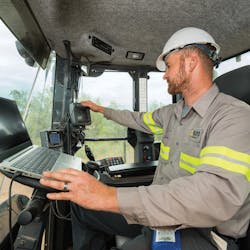
Let me own up to the fact that while I really like simulators, bicycle racing is well outside my area of interest. Given my military aviation background and the role simulators played in developing my piloting skills, I’m a card-carrying believer in their value and more than a little surprised how long it’s taken for simulators to hit the construction arena. Considering the complexity of today’s equipment, as well as operating costs that continue to escalate, it only makes sense to find more cost-effective and efficient ways to assess, train, and maintain operator proficiency….and that’s just for starters.
Discounting cap pistols and whiffle balls, my first encounter with a simulator took place at Saufley Field, FL. It was a Procedures Trainer that allowed flight students to perform normal flight and emergency procedures until they were hardwired into the psyche. This low-tech replica of a Beechcraft T-34B Mentor primary trainer consisted of a folding metal chair surrounded by a wooden framework housing, a cardboard-backed photo of the instrument panel, and plywood side rails holding throttle, prop, and mixture levers, along with landing gear, flap handles, and—to a neophyte such as I—a dizzying array of switches and circuit breakers. Especially noteworthy was the fact that not one of these features actually did anything.
Nevertheless, I spent untold hours putting myself and the humble contraption through every flight situation imaginable. Today, fully half a century later, I can recite the Preparation for Landing checklist and envision the practices involved with absolute assurance that nothing will be left to chance. The catechism itself is elegant in its simplicity: “Chop” (throttle closed)…”Prop” (advance to full rpm)…”110 Drop” (slow to 110 knots and then lower the landing gear). It laundered my brain so effectively that anytime I fly a fixed-gear aircraft, my left hand goes for a nonexistent gear handle and I get the eerie sensation I’ve forgotten to do something.
Then there were the emergency procedures: Fire during Start, Loss of Power, Prop Governor Failure, Unsafe Landing Gear, Electrical Fire Inflight, and a dozen more, each with its own set of by-the-numbers actions, that I and my running mates practiced until the responses were truly automatic. Here again, the effectiveness was so great that I find myself amazed that in 8,000-plus flight hours, I can count on one hand the number of times I’ve had to respond to an emergency.
As aircraft and their missions became more complex, simulators became increasingly capable, coming close to duplicating the experience of actual flight, absent the specter of turning the machine into a pile of rubble. Instead, you had the opportunity to explore the edges of the operating envelope, lose control, crash, reset, and try again….and again.
The advantages of simulators are obvious. Training can take place anytime and anywhere without risk to operators or equipment. Compared with on-the-job training, simulators can be more effective, not only because they encourage repetition but also because they allow for precise monitoring and performance documentation…all without subjecting production machinery to unnecessary wear and tear, added operating costs, and unacceptable scheduling conflicts.
Research shows that equipment productivity can vary up to 40% depending on the experience of the operator. Novices are able to gain valuable experience in a safe environment, allowing them to be productive the moment they show up at their first job site. For experienced operators, the rewards are easily as great, as they are able to hone their skills during slack periods, allowing them to achieve ever-higher levels of productivity through monitored and evaluated practice.
Simulators in the electronic Job-Site Era
Military pilots routinely use simulators to run through entire missions—perhaps repeating critical segments several times—prior to conducting the actual flights. In this manner, far less is left to chance than might otherwise be the case. Not only can aircrews refine routine aspects of a mission; they also can evaluate and prepare for specifics such as target features and air defense systems.
What has this to do with grading and excavating? A lot when you stop and think about optimizing such routine tasks as equipment staging, movement, and dirt-moving operations…even more when you throw in such variables as underground utilities, hidden rock strata, or the hundreds of other factors than complicate nearly any job.
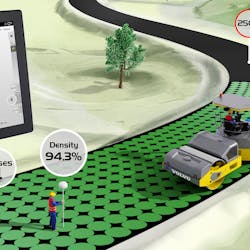
Today, we tend to think of simulators as training tools, but as we gain experience with the electronic job site, they may rise to become an indispensable element in our equipment stable.
Do you have experience with simulators? I’d like to hear what you have to say.
*****
Upcomimg Forester University Webinars:
Dec 7th, 2011:
Maximize Your Energy Efficiency and Savings with Lighting Solutions
Stop wasting energy and savings on your lighting! Join Gregory Davis, Chief Technology Officer at Lumetric, Inc. on December 7th at 2p.m. EST to explore lighting efficiency technology as a means to maximize your energy efficiency and increase your savings. We’ll discuss efficiency opportunities, technologies, and applications available in lighting, and compare solutions (e.g., application, maintenance, lifespan, etc.) for your best ROI.
Dec 13th, 2011:
Stormwater Inspection and Maintenance
Don’t get caught in the storm. Join Andrew J. Erickson, M.S., P.E., for Stormwater Inspection & Maintenance on Dec. 13th, a discussion of standardized stormwater inspection methods and performance assessment. Learn how to use these to assess, select, and schedule effective and financially sustainable maintenance on stormwater treatment practices (e.g., stormwater ponds, bioretention facilities, infiltration basins, swales, and filter strips).