














































May-June 2004

GPS System Proves Safe and Productive

Article Tools

  • RSS
  • Save
  • Print
  • Email
Create a Link to this Article

Friday, April 30, 2004

By Daniel C Brown

Comments

The contractor was working on a 13-mi. pavement reconstruction project located on Interstate 15, about 10 mi. north of Butte, MT, where the company is based. Some 10 mi. of the $14.5 million project had a swampy subgrade and required a geotextile, a geogrid, and an 18-in.-thick gravel base course to stabilize the soil.

A motor grader was cutting the gravel base to grade using "blue tops," or wooden stakes, as a guide for grade. Two of Gilman's "stake jumpers," or grade checkers, one on each side, were working with the motor grader to set grade. If the grader knocked out a stake, the stake jumper would replace it, or if the grader covered up a stake, the stake jumper would uncover it.

The motor grader would cut one way, raise the blade, back up, and once again cut grade going forward. Somehow a stake jumper got behind a motor grader that was backing up, and a serious accident occurred.

Corrective Measures

Since the accident, Gilman has purchased a Trimble BladePro 3D controller that uses a global positioning system (GPS) to automate grade control and eliminate virtually all of the need for stake jumpers. And Gilman has begun to enforce its safety policies more strongly in the field.

The company has a safety training program for and distributes a safety handbook to all of its employees. "We've set much-more-strict policies that prohibit [people from riding] on our equipment, unless they're in a seat authorized by the manufacturer and have a seatbelt on," says George Friez, an engineer/project manager with Gilman.

Automatic Grade Control

The accident occurred in 2002, and for the 2003 season, Gilman used its Trimble GPS system. "The GPS literally eliminates the need for stake jumpers," says Jim Gilman, president and owner of the company. "We get the safety factor, we increase production, and we get closer accuracy with our grading."

In fact, the wait for staking used to delay grading operations, Gilman says. He estimates that the GPS system, which controls a motor-grader blade automatically, boosts production by 10 to 15%.

"Before we had the GPS system, we were guessing at what grade we needed," says Friez. "Then we'd set blue-top stakes and cut grade again. This way, they get it right the first time."

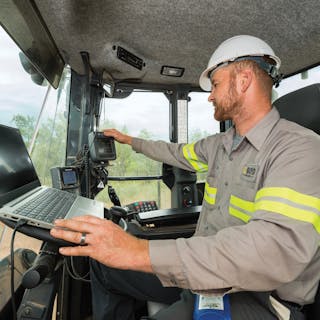
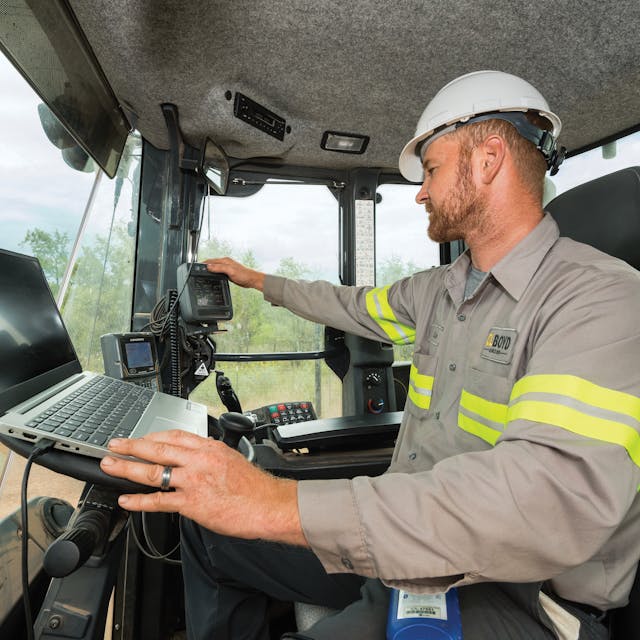
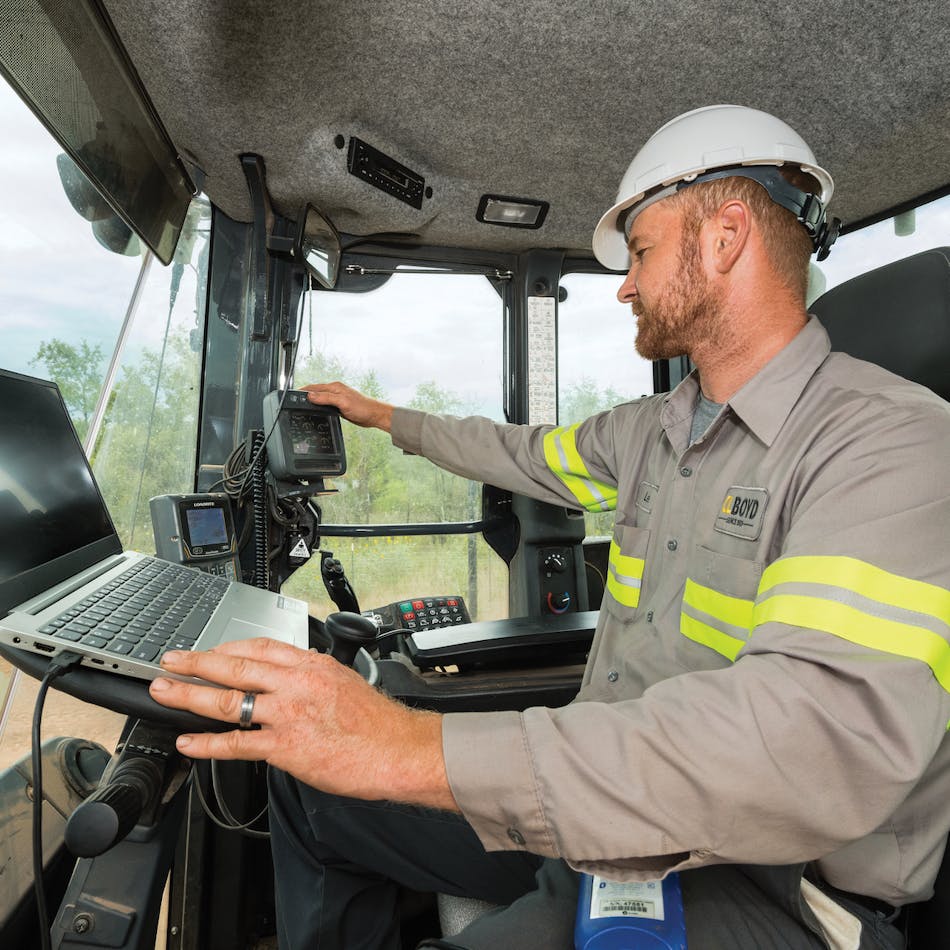
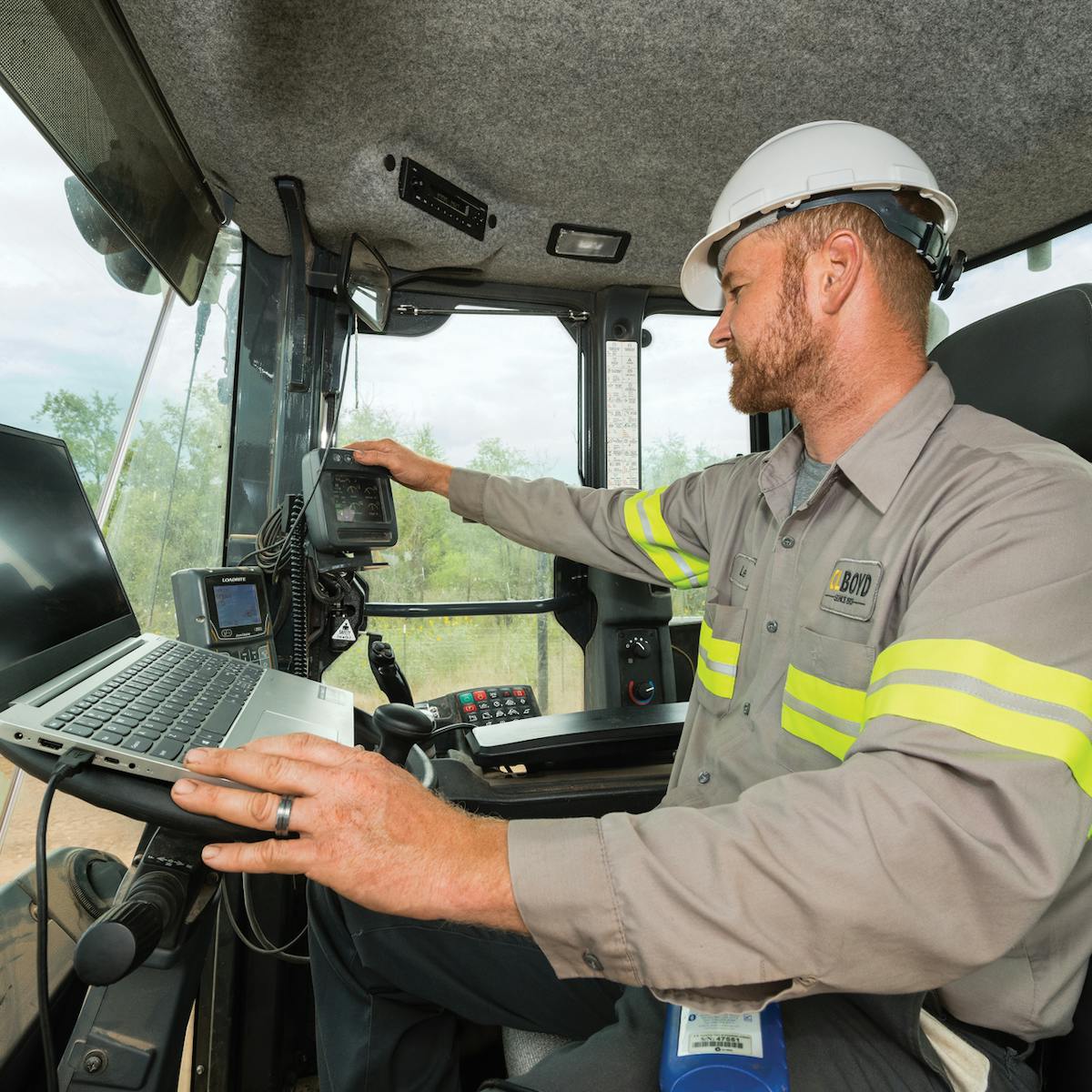
Joe Micklos is a 3D-machine specialist with Trimble, and he sold Gilman the BladePro 3D system. The BladePro system uses GPS signals to determine the precise blade location. With the blade located on one side, cross-slope sensors set slope across the blade, Micklos says.

The GPS system actually enabled both Gilman and Pumco, a Montana earthmoving subcontractor, to grade a project simultaneously using the same base station. By tracking the GPS satellites from both the piece of equipment and the base station, the system can determine the exact location of the blade. Pumco's system, however, is Trimble's SiteVision rig, which can be transferred from one earthmoving machine to another. Both the SiteVision and BladePro systems can automate blade control, but SiteVision uses GPS signals entirely to control the blade; cross-slope sensors are not needed.

Either a SiteVision or a BladePro system costs about $110,000–$120,000, says Micklos. "These systems pay for themselves with increased production. I've sold about 75 systems, and across the board, customers say they now have the ability to complete jobs on schedule."

Before Gilman bought Trimble's BladePro GPS System, the contractor tried Trimble's laser-equipped system that transmits grade through a laser beam set on a tripod. "That system worked well, but the problem was the terrain," says Friez. "We had a lot of ups and downs in the terrain, and we had to keep moving the transmitter so it could see the blade.

"With the GPS system, you set up the base station and you're good to go all day long," he asserts.

Gilman, with Pumco as the earthmoving subcontractor, teamed up on a 10-mi. total-reconstruction job that entailed more than 1 million yd.3 of earth and 350,000 tons of base gravel, Friez recalls. With its SiteVision system, Pumco was able to complete the finished subgrade without using any blue-top hubs or stake jumpers. "Once we saw that Pumco's GPS system was capable of meeting the plus-or-minus 15 millimeters, we decided to try that."

Adds Gilman, "Besides safety, one of the biggest advantages to the system is that we're not dependent on surveyors, and we're not waiting on anybody."

Author's Bio: Daniel C. Brown writes on safety and technology in the construction industry.


Advertisement]

What Do You Think?


Be the first to tell us what you think!

Post a Comment

Note from the Editor: The content that appears in our "Comments" section is supplied to us by outside, third-party readers, and organizations and does not necessarily reflect the view of our staff or Forester Media—in fact, we may not agree with it—and we do not endorse, warrant, or otherwise take responsibility for any content supplied by third parties that appear on our website. All comments are subject to approval.

CAPTCHA Validation
CAPTCHA
Code:


Grading and Excavation Contractor Email Updates!

Get weekly news and updates through our email newsletter!