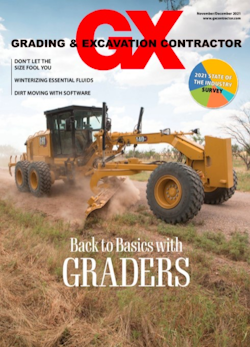









September-October 1999

Small Is Smart

For a growing number of grading and excavation contractors, skid-steer loaders aren't an option, they're a necessity. Here's a look at how these amazing machines can pay off, as well as some tips for buying the one that's just right for you.

Article Tools

  • RSS
  • Save
  • Print
  • Email
Create a Link to this Article

Tuesday, August 31, 1999

By Greg Northcutt

Comments

Don't let the trim, compact size of skid-steer loaders fool you. These multipurpose, four-wheeled mighty mites are exceptionally big around construction sites. Big in saving high labor costs. Big in saving precious time. Big in making money. Pound for pound, dollar for dollar, they're arguably the biggest and best value of any piece of grading or excavating equipment on the market today.

They're speedy, nimble, and affordable. Sticker prices for skid-steer loaders suitable for grading and excavating work generally are posted in the $20,000-$45,000 range. With engines ranging in power from about 45 to 105 hp, these machines measure about 7-9 ft. long without attachments, 5-6 ft. wide, and 6-7 ft. or so high and weigh 5,000-10,000 lb. They can spin completely around within their own length and can work easily in places too small for big iron and where high labor costs and tight schedules rule out the use of hand tools.

What's more, no other machine in the price range of skid-steer loaders can do so many jobs so well. Thanks to an astonishing range of attachments---one manufacturer counts more than 75 for some of its models---these no-nonsense machines can master just about any task needed for excavating and grading work in tight places. That's an increasingly valuable trait as the size of building sites, particularly in metropolitan areas, continues to shrink. Even in open areas, skid-steer loaders can still outperform bigger equipment in certain jobs and situations.

Want to dig a trench? Attach a backhoe. When you're done digging, use a bucket to backfill the trench. Then switch to a trench compactor to finish the job.

Maybe your building site is covered with brush. Hook on a brush-cutting attachment. Next, use a grapple attachment to pile or load brush and tree cuttings. Change to a bucket for some rough excavating and grading. To complete the job, attach a laser-guided, six-way blade for the finish grading.

If your work site includes soils too soft for wheeled equipment or slopes where you need more traction, slip a pair of steel tracks over the wheels. If access to your job means crossing such sensitive surfaces as a blacktop driveway or a lawn, use rubber tracks instead.

Thomas skid-steer
Thoams skid-steer loader with grading attachment

When you're not moving dirt or debris, you can boost productivity even more by using your skid-steer loader to move concrete forms, spot pallets of sod, blocks, and who-knows-what-else. If winter weather closes down construction projects, attach a blade, a bucket, or a snow blower to fatten up those lean times with income from snow-removal work.

The compact size of skid-steer loaders also pays off with lower transportation costs. Compared to larger, heavier equipment, you can haul skid-steer loaders to the job site using smaller, less expensive trucks and trailers than required for bigger machines. In turn, that means lower insurance and tax rates and less stringent driver licensing requirements.

Add it all up, and skid-steer loaders make plenty of good dollars and sense for a growing number of grading and excavating contractors. Skid-steer loaders were once dismissed by skeptics as more toy than tool, but now many contractors in the industry wouldn't think of leaving the shop without their trusty skid-steer loaders.

More than a few enterprising equipment operators have used skid-steer loaders as their ticket to self-employment as grading and excavating contractors. That fact hasn't been lost on the full-line equipment manufacturers either. They see sales of skid-steer loaders to these entrepreneurs as an opportunity to form long-term relationships with customers who will upgrade to larger equipment as their businesses grow.

Skid-steer loaders have charged into the construction market in a big way in the 1990s. Peter Mabee, product and marketing manager for skid-steer-loader maker Thomas Equipment Ltd. in Mars Hill, ME, reports that demand for the machines in the United States has grown at a "phenomenal rate," increasing 140% since 1991 to yearly sales of more than 50,000 units. These machines now represent the largest single segment of the construction-equipment market with respect to units sold annually.

"In the past few years, the demand---in terms of machine size and capacity---has shifted," Mabee points out. "The market had been traditionally dominated by midsize units with a rated lift capacity of around 1,300 pounds. The demand has been steadily growing for skid-steer loaders with larger capacity and better performance."

"Everywhere you go, contractors want to buy skid-steer loaders because they're so versatile," reports Rod Osterloh, chief operating officer for Hecla Industries in Hecla, SD, which makes Patriot skid-steer loaders. "A contractor may use a large wheel loader for big work but will use a skid-steer loader for final work in smaller areas and close to buildings. They make a lot of construction jobs go a lot faster. They're the right tool for many applications."

Buyers include large construction firms, which have found that skid-steer loaders can fit into their equipment fleet and provide a good return on their investment. As long as the economy stays strong, say manufacturers, sales of skid-steer loaders should continue climbing for at least the next few years. The growing popularity of these machines reflects several factors:

  • construction contractors' increased appreciation of the profit ability of skid-steer loaders;
  • continued development of an ever-widening range of attachments ("With so many different attachments available now, use of a skid-steer loader is limited only by your creativity," remarks George Chaney, compact products sales manager for JCB Inc. in White March, MD);
  • a universal mounting system that allows various attachments to be used on different makes of machines;
  • technological advances in skid-steer-loader features, including more powerful units; and
  • greatly improved reliability and durability compared to some of the machines in the past.
Hecla Patriot skid-steer
Hecla Patriot skid-steer loader

Skid-steer loaders have come a long way from their humble beginnings more than 40 years ago on a farm in Minnesota. That's when a turkey grower, tired of cleaning out manure from his barn using hand tools, announced that he wanted a machine with forks that would do the job faster and easier. It had to be small and maneuverable enough to clean around the barn's many posts. Two brothers who ran a nearby blacksmith and machine shop accepted the challenge.

Melrose Bobcat skid-steer
Melroe Bobcat skid-steer loader

The result was a small, self-propelled, three-wheeled machine: two drive wheels in front, a manure fork attached to two lift arms, a small caster wheel in the rear, and a 6-hp engine. It featured two steering levers-one for each drive wheel-and could turn 360° on a dime. The machine attracted the attention and interest of the Melroe Manufacturing Company in Gwinner, ND, which acquired rights to the machine. Refining the concept, Melroe enlarged the machine, beefed up its power, added another wheel, and in 1960 introduced the world's first four-wheel-drive skid-steer loader.

Skid steering is the key to the agility of these machines, which in turn hinges on the ratio of the loader's tire-tread width to wheelbase and on the machine's balance. With conventional four-wheel motorized vehicles, the two rear wheels are mounted onto a fixed axle to roll either forward or backward, while the front two wheels can be turned to the right or left as they roll forward or backward. All four wheels on a skid-steer loader are mounted onto fixed axles and run only straight ahead or straight back.

Also, unlike conventional four-wheel, self-propelled vehicles, which have one drive system for two or all four wheels, skid-steer loaders have two independent transmissions. One controls the two right wheels; the other controls the left two. This setup provides two ways to change the direction of travel. To turn the machine to the left and away from a wall, for example, you stop rotation of the two left tires by keeping their steering control in neutral. Then, using the right steering control, you forward rotate the two right tires. This causes the machine to skid to the left, giving the machine its skid-steer feature. For a faster spin turn, as when loading dirt from a pile into a truck, you forward-rotate tires on one side while reversing tire rotation on the other side.

Whether the skid-steer loader turns or pivots on the front or the rear axle depends on how weight is distributed, explains Lynn Roesler, skid-steer-loader products manager for Melroe Company. "Skid-steer loaders are designed so that, without a load on the bucket, about 70 percent of the machine's weight is on the rear axles and about 30 percent is on the front axles. With most of the load on the rear axles, the machine turns or pivots on the rear wheels, and the front wheels skid right or left.

"When the bucket is loaded or another tool is attached, weight distribution reverses. Now most of the weight is on the front axles, and the rear wheels skid as the machine turns or spins. The optimum tread width-to-wheelbase ratio enables a properly designed skid-steer loader to turn without consuming excess engine power or causing excess tire wear."

At one time, belts, gears, shafts, and clutches were used to transmit engine power to the wheels of skid-steer loaders. Today, hydrostatic transmissions do the job using hydraulic fluid, pumps, and motors. Hydrostatic transmissions operate much more smoothly than mechanical-drive systems. Also, controls with hydrostatic systems respond the instant you move them, unlike the slight delays you experience when you engage clutch-operated mechanical drives. Hydrostatic systems require less servicing than mechanical transmissions. However, servicing hydrostatic systems, particularly the pumps, requires a much higher level of technical expertise. Hydraulics is also used to control the lift arms or booms and the buckets, pallet forks, and other tools attached to them.

JCB Robot skid-steer
JCB Robot skid-steer loader

Over the years, skid-steer-loader manufacturers have continued to improve and refine their products. A few manufacturers have developed hybrids. For example, JCB offers a machine that it calls a skid-steer backhoe loader. On the front is a pair of lift arms, which can be fitted with buckets or a wide variety of other attachments using a universal quick-hitch system. A backhoe is mounted on the rear-not as an attachment but as an integral part of the machine. Also, the backhoe bucket can be unpinned and replaced with such attachments as a hydraulic breaker, auger, or clam bucket. JCB reports that this machine offers the performance and maneuverability of a 1,350-lb.-rated operating-capacity loader and the digging performance of a 3-ton excavator.

Takeuchi compact track loader
Takeuchi TL 26 compact track loader

Another hybrid, a machine similar in size and performance to the larger, more powerful skid-steer loaders, features a dedicated track system instead of wheels. These compact track loaders offer improved flotation for working on soft and muddy ground and increased traction on uneven terrain. Also, they're more versatile than a crawler dozer because they can be used with a bucket and many other types of attachments, notes Rex Hayes, product sales manager for Takeuchi in Buford, GA, which makes the TL26 compact rubber-track loader. He compares it to a conventional skid-steer loader: "Whenever the tires of a skid-steer loader are spinning as you're digging, you're wasting power. Compact track loaders have much greater traction and can make more efficient use of the machine's power for digging. That can be important when excavating tough, heavy soils.

"Also, because of increased flotation, a compact track loader lets you get back to rough grading sooner after a rain than a wheeled skid-steer loader does. If you gain two extra working days a month, that's a total of 24 more days a year. That can put a lot of extra money in your pocket."

Don't let the trim, compact size of skid-steer loaders fool you. These multipurpose, four-wheeled mighty mites are exceptionally big around construction sites. Big in saving high labor costs. Big in saving precious time. Big in making money. Pound for pound, dollar for dollar, they're arguably the biggest and best value of any piece of grading or excavating equipment on the market today.

They're speedy, nimble, and affordable. Sticker prices for skid-steer loaders suitable for grading and excavating work generally are posted in the $20,000-$45,000 range. With engines ranging in power from about 45 to 105 hp, these machines measure about 7-9 ft. long without attachments, 5-6 ft. wide, and 6-7 ft. or so high and weigh 5,000-10,000 lb. They can spin completely around within their own length and can work easily in places too small for big iron and where high labor costs and tight schedules rule out the use of hand tools.

What's more, no other machine in the price range of skid-steer loaders can do so many jobs so well. Thanks to an astonishing range of attachments---one manufacturer counts more than 75 for some of its models---these no-nonsense machines can master just about any task needed for excavating and grading work in tight places. That's an increasingly valuable trait as the size of building sites, particularly in metropolitan areas, continues to shrink. Even in open areas, skid-steer loaders can still outperform bigger equipment in certain jobs and situations.

Want to dig a trench? Attach a backhoe. When you're done digging, use a bucket to backfill the trench. Then switch to a trench compactor to finish the job.

Maybe your building site is covered with brush. Hook on a brush-cutting attachment. Next, use a grapple attachment to pile or load brush and tree cuttings. Change to a bucket for some rough excavating and grading. To complete the job, attach a laser-guided, six-way blade for the finish grading.

If your work site includes soils too soft for wheeled equipment or slopes where you need more traction, slip a pair of steel tracks over the wheels. If access to your job means crossing such sensitive surfaces as a blacktop driveway or a lawn, use rubber tracks instead.

Thomas skid-steer
Thoams skid-steer loader with grading attachment

When you're not moving dirt or debris, you can boost productivity even more by using your skid-steer loader to move concrete forms, spot pallets of sod, blocks, and who-knows-what-else. If winter weather closes down construction projects, attach a blade, a bucket, or a snow blower to fatten up those lean times with income from snow-removal work.

The compact size of skid-steer loaders also pays off with lower transportation costs. Compared to larger, heavier equipment, you can haul skid-steer loaders to the job site using smaller, less expensive trucks and trailers than required for bigger machines. In turn, that means lower insurance and tax rates and less stringent driver licensing requirements.

Add it all up, and skid-steer loaders make plenty of good dollars and sense for a growing number of grading and excavating contractors. Skid-steer loaders were once dismissed by skeptics as more toy than tool, but now many contractors in the industry wouldn't think of leaving the shop without their trusty skid-steer loaders.

More than a few enterprising equipment operators have used skid-steer loaders as their ticket to self-employment as grading and excavating contractors. That fact hasn't been lost on the full-line equipment manufacturers either. They see sales of skid-steer loaders to these entrepreneurs as an opportunity to form long-term relationships with customers who will upgrade to larger equipment as their businesses grow.

Skid-steer loaders have charged into the construction market in a big way in the 1990s. Peter Mabee, product and marketing manager for skid-steer-loader maker Thomas Equipment Ltd. in Mars Hill, ME, reports that demand for the machines in the United States has grown at a "phenomenal rate," increasing 140% since 1991 to yearly sales of more than 50,000 units. These machines now represent the largest single segment of the construction-equipment market with respect to units sold annually.

"In the past few years, the demand---in terms of machine size and capacity---has shifted," Mabee points out. "The market had been traditionally dominated by midsize units with a rated lift capacity of around 1,300 pounds. The demand has been steadily growing for skid-steer loaders with larger capacity and better performance."

"Everywhere you go, contractors want to buy skid-steer loaders because they're so versatile," reports Rod Osterloh, chief operating officer for Hecla Industries in Hecla, SD, which makes Patriot skid-steer loaders. "A contractor may use a large wheel loader for big work but will use a skid-steer loader for final work in smaller areas and close to buildings. They make a lot of construction jobs go a lot faster. They're the right tool for many applications."

Buyers include large construction firms, which have found that skid-steer loaders can fit into their equipment fleet and provide a good return on their investment. As long as the economy stays strong, say manufacturers, sales of skid-steer loaders should continue climbing for at least the next few years. The growing popularity of these machines reflects several factors:

  • construction contractors' increased appreciation of the profit ability of skid-steer loaders;
  • continued development of an ever-widening range of attachments ("With so many different attachments available now, use of a skid-steer loader is limited only by your creativity," remarks George Chaney, compact products sales manager for JCB Inc. in White March, MD);
  • a universal mounting system that allows various attachments to be used on different makes of machines;
  • technological advances in skid-steer-loader features, including more powerful units; and
  • greatly improved reliability and durability compared to some of the machines in the past.
Hecla Patriot skid-steer
Hecla Patriot skid-steer loader

Skid-steer loaders have come a long way from their humble beginnings more than 40 years ago on a farm in Minnesota. That's when a turkey grower, tired of cleaning out manure from his barn using hand tools, announced that he wanted a machine with forks that would do the job faster and easier. It had to be small and maneuverable enough to clean around the barn's many posts. Two brothers who ran a nearby blacksmith and machine shop accepted the challenge.

Melrose Bobcat skid-steer
Melroe Bobcat skid-steer loader

The result was a small, self-propelled, three-wheeled machine: two drive wheels in front, a manure fork attached to two lift arms, a small caster wheel in the rear, and a 6-hp engine. It featured two steering levers-one for each drive wheel-and could turn 360° on a dime. The machine attracted the attention and interest of the Melroe Manufacturing Company in Gwinner, ND, which acquired rights to the machine. Refining the concept, Melroe enlarged the machine, beefed up its power, added another wheel, and in 1960 introduced the world's first four-wheel-drive skid-steer loader.

Skid steering is the key to the agility of these machines, which in turn hinges on the ratio of the loader's tire-tread width to wheelbase and on the machine's balance. With conventional four-wheel motorized vehicles, the two rear wheels are mounted onto a fixed axle to roll either forward or backward, while the front two wheels can be turned to the right or left as they roll forward or backward. All four wheels on a skid-steer loader are mounted onto fixed axles and run only straight ahead or straight back.

Also, unlike conventional four-wheel, self-propelled vehicles, which have one drive system for two or all four wheels, skid-steer loaders have two independent transmissions. One controls the two right wheels; the other controls the left two. This setup provides two ways to change the direction of travel. To turn the machine to the left and away from a wall, for example, you stop rotation of the two left tires by keeping their steering control in neutral. Then, using the right steering control, you forward rotate the two right tires. This causes the machine to skid to the left, giving the machine its skid-steer feature. For a faster spin turn, as when loading dirt from a pile into a truck, you forward-rotate tires on one side while reversing tire rotation on the other side.

Whether the skid-steer loader turns or pivots on the front or the rear axle depends on how weight is distributed, explains Lynn Roesler, skid-steer-loader products manager for Melroe Company. "Skid-steer loaders are designed so that, without a load on the bucket, about 70 percent of the machine's weight is on the rear axles and about 30 percent is on the front axles. With most of the load on the rear axles, the machine turns or pivots on the rear wheels, and the front wheels skid right or left.

"When the bucket is loaded or another tool is attached, weight distribution reverses. Now most of the weight is on the front axles, and the rear wheels skid as the machine turns or spins. The optimum tread width-to-wheelbase ratio enables a properly designed skid-steer loader to turn without consuming excess engine power or causing excess tire wear."

At one time, belts, gears, shafts, and clutches were used to transmit engine power to the wheels of skid-steer loaders. Today, hydrostatic transmissions do the job using hydraulic fluid, pumps, and motors. Hydrostatic transmissions operate much more smoothly than mechanical-drive systems. Also, controls with hydrostatic systems respond the instant you move them, unlike the slight delays you experience when you engage clutch-operated mechanical drives. Hydrostatic systems require less servicing than mechanical transmissions. However, servicing hydrostatic systems, particularly the pumps, requires a much higher level of technical expertise. Hydraulics is also used to control the lift arms or booms and the buckets, pallet forks, and other tools attached to them.

JCB Robot skid-steer
JCB Robot skid-steer loader

Over the years, skid-steer-loader manufacturers have continued to improve and refine their products. A few manufacturers have developed hybrids. For example, JCB offers a machine that it calls a skid-steer backhoe loader. On the front is a pair of lift arms, which can be fitted with buckets or a wide variety of other attachments using a universal quick-hitch system. A backhoe is mounted on the rear-not as an attachment but as an integral part of the machine. Also, the backhoe bucket can be unpinned and replaced with such attachments as a hydraulic breaker, auger, or clam bucket. JCB reports that this machine offers the performance and maneuverability of a 1,350-lb.-rated operating-capacity loader and the digging performance of a 3-ton excavator.

Takeuchi compact track loader
Takeuchi TL 26 compact track loader

Another hybrid, a machine similar in size and performance to the larger, more powerful skid-steer loaders, features a dedicated track system instead of wheels. These compact track loaders offer improved flotation for working on soft and muddy ground and increased traction on uneven terrain. Also, they're more versatile than a crawler dozer because they can be used with a bucket and many other types of attachments, notes Rex Hayes, product sales manager for Takeuchi in Buford, GA, which makes the TL26 compact rubber-track loader. He compares it to a conventional skid-steer loader: "Whenever the tires of a skid-steer loader are spinning as you're digging, you're wasting power. Compact track loaders have much greater traction and can make more efficient use of the machine's power for digging. That can be important when excavating tough, heavy soils.

"Also, because of increased flotation, a compact track loader lets you get back to rough grading sooner after a rain than a wheeled skid-steer loader does. If you gain two extra working days a month, that's a total of 24 more days a year. That can put a lot of extra money in your pocket."

Gehl skid-steer loader

Manufacturers offer a large selection of different skid-steer-loader models, features, options, and accessories. To help put the competitive claims and features in perspective, Larry James, manager of distribution development/planning for Gehl Company in West Bend, WI, offers this thought: "No company attempts to build a bad product. Often the differences between various skid-steer-loader brands reflect differences in engineering philosophies and marketing approaches."

That still leaves you, the buyer, with the task of sorting through all the choices when picking the skid-steer loader that best matches your needs. To help narrow and simplify your search, here's a list of some of the factors to consider while shopping:

Reliability/Durability

In most brands of skid-steer loaders, drive chains turn the front and rear axles. At least one line of loaders uses gears instead of chains to transmit power from the hydrostatic motors to the axles. The manufacturers claim advantages for each system: Chain drives cost less and are fairly easy to service. Gear drives are more durable and require no periodic adjustment, as do some chain drives.

Safety

Features. Manufacturers equip their skid-steer loaders with a number of features designed to minimize the risk of injuries when operating the machines. These features include lock-out systems that prevent use of hydraulic controls until you are seated with seat belt fastened and seat bar lowered, a ROPS/FOPS (roll-over protective structure/falling object protective structure)-approved cab, supports to prevent the lift arms from lowering accidentally when servicing or repairing the machine, front and rear lights, and back-up alarms.

Visibility. The view from the operator's seat is, of course, a key safety consideration. Check visibility to the front, sides, and rear.

Comfort/Convenience

Controls. Several different types of controls are used to steer skid-steer loaders and operate the lift arms and buckets, depending on manufacture.

In one type, you use hand and foot controls, steer by using a lever for each hand, raise and lower the lift arms with one foot, and control the bucket with the other foot. In another, you use your hands to steer and operate the boom and bucket. With a third type, you steer using one lever and operate the bucket and lift arms with a joystick.

Some manufacturers offer several choices. Which method is best? Whichever one you get used to, say many veteran operators.

Features. A number of options and accessories are available for most skid-steer loaders that can increase the usefulness, comfort, and convenience of the machines. For example:

  • enclosed, heated cab;
  • electronic monitoring of vital engine conditions and emergency shutdown to protect engine from catastrophic damage from low oil pressure or overheating;
  • suspension seat (well worth the extra cost, say those who have one);
  • hydraulic self-leveling bucket (a nifty feature in some applications that makes your job easier by keeping loads level throughout the entire loader arc when lifting and lowering);
  • sound insulation to reduce machine noise; and
  • top and rear windows to protect you from weather and help lower noise levels.

Servicing

In general, today's skid-steer loaders are much easier to service than those of the past. This is demonstrated by such features as a swing-open rear door for speedy access to the engine components, easy-to-reach service items such as filters and fluid-level indicators, a tip-up cab to reach hydrostatic system components quickly, and quick-release pins and panels. Ease of service is an important feature.

Daewoo skid-steer loader

"Skid-steer loaders are being used more heavily under more adverse conditions than they once were," says Kim Robinson, vice president of sales and marketing for Daewoo in Suwanee, GA. "That means more frequent oil and filter changes and other servicing. The easier the machine is to service, the more likely it will be serviced when needed."

<Financing

This can be a critical item, especially if you're starting your business.

Bob Davis, national accounts manager for Compact Technologies headquartered in Port Washington, WI, offers this advice: "In addition to considering factors such as product quality and good support from the factory and dealer, you should also select from manufacturers that can respond to your need for financing."

Author's Bio: Guest author Greg Northcutt writes frequently on construction and business issues.


Advertisement]

What Do You Think?


Be the first to tell us what you think!

Post a Comment

Note from the Editor: The content that appears in our "Comments" section is supplied to us by outside, third-party readers, and organizations and does not necessarily reflect the view of our staff or Forester Media—in fact, we may not agree with it—and we do not endorse, warrant, or otherwise take responsibility for any content supplied by third parties that appear on our website. All comments are subject to approval.

CAPTCHA Validation
CAPTCHA
Code:


Grading and Excavation Contractor Email Updates!

Get weekly news and updates through our email newsletter!